 (+035) 527-1710-70
 NEWSLETTER


Introduction: Bengaluru’s Urban Flooding Problem Is Structural, Not Seasonal
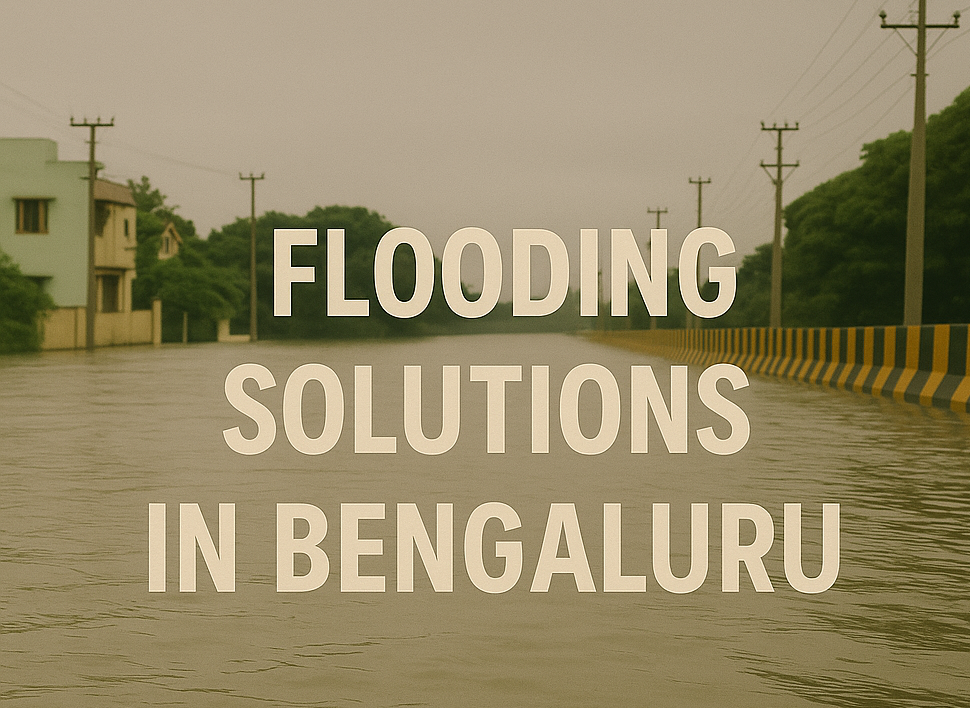
Bengaluru’s flooding issues are no longer limited to extreme rainfall events. Over the last decade, even moderate monsoon showers have resulted in waterlogging, road submergence, basement flooding, and disruption of residential, commercial, and industrial operations across multiple parts of the city. Areas such as Whitefield, Sarjapur Road, Outer Ring Road, Yelahanka, and parts of North and East Bengaluru have repeatedly experienced flooding-related damage.
The root cause lies in a combination of rapid urbanisation, loss of natural drainage systems, encroachment of lake networks, inadequate stormwater infrastructure, and rising groundwater interaction with built environments. Flooding in Bengaluru is increasingly a hydrological and groundwater-linked problem, not just a surface drainage failure.
In this context, Flooding Solutions in Bengaluru must be based on scientific assessment and integrated water management rather than reactive measures.
What Are Flooding Solutions?
Flooding solutions refer to a set of engineering, hydrological, and groundwater management measures designed to prevent, control, or mitigate excess surface water and subsurface water accumulation. These solutions address both immediate flood risks and long-term vulnerability.
Effective flooding solutions typically involve:
-
Assessment of surface runoff patterns
-
Analysis of stormwater drainage capacity
-
Understanding groundwater levels and seepage interaction
-
Identifying flow obstructions and low-lying zones
-
Designing mitigation and control measures
Unlike temporary pumping or ad-hoc drainage fixes, professional flooding solutions focus on preventing recurrence by addressing the underlying causes of flooding.
Flooding Challenges in Bengaluru
Bengaluru’s flooding challenges are deeply linked to its geography, urban form, and groundwater behaviour.
1. Disrupted Lake and Drainage Networks
Historically, Bengaluru relied on a cascading system of lakes connected by stormwater drains (rajakaluves). Urban expansion has interrupted these connections, reducing the city’s ability to naturally manage excess rainfall.
2. Inadequate Stormwater Infrastructure
In many areas, existing stormwater drains are undersized, poorly maintained, or encroached upon. During intense rainfall, these systems fail to carry runoff efficiently, leading to surface flooding.
3. Groundwater Interaction and Seepage
Rising groundwater levels during monsoon periods often interact with basements, underground utilities, and foundations. This subsurface component is frequently overlooked, resulting in persistent water ingress even after surface water recedes.
4. High Impervious Surface Coverage
Concrete-heavy development has significantly reduced natural infiltration zones. Rainwater that once percolated into the ground now becomes surface runoff, overwhelming drainage systems.
5. Climate Variability
Short-duration, high-intensity rainfall events are becoming more common. These events generate large runoff volumes within a short time, increasing flood risk across the city.
Our Flooding Solutions Approach in Bengaluru
At The Ground Water Company, flooding is approached as a combined surface water and groundwater management challenge. Our solutions are based on site-specific assessment rather than generic drainage design.
Our approach typically includes:
-
Site-level flood risk and waterlogging assessment
-
Evaluation of surface runoff and drainage pathways
-
Groundwater level monitoring and seepage analysis
-
Identification of interaction between drains, basements, and aquifers
-
Design of integrated flood mitigation strategies
The detailed scope and technical execution align directly with our core service offering on the
Flooding Solutions
This ensures the blog strengthens the service page’s authority while remaining informational and location-focused.
Why Flooding Solutions Are Critical in Bengaluru
Flooding in Bengaluru has implications that extend beyond temporary inconvenience. Repeated flooding events affect infrastructure longevity, public safety, operational continuity, and environmental health.
Scientific flooding solutions help:
-
Reduce damage to buildings and underground infrastructure
-
Minimise disruption to business and residential activity
-
Protect foundations and basements from long-term water ingress
-
Improve urban resilience to extreme rainfall events
-
Prevent groundwater contamination caused by floodwater intrusion
As Bengaluru continues to densify, unmanaged flooding risks can significantly undermine urban sustainability.
How Flooding Solutions Integrate with Other Groundwater Services
Flood mitigation in Bengaluru is most effective when combined with complementary groundwater services that address subsurface water behaviour.
Flooding solutions are often implemented alongside:
-
dewatering solutions for construction and basements, especially in areas with high groundwater tables
-
groundwater recharge planning to improve infiltration and reduce surface runoff where feasible
This integrated approach ensures that flood control measures do not inadvertently worsen groundwater conditions or create secondary risks.
Regulatory & Compliance Context
Urban flood management in India is increasingly guided by national water management frameworks and technical standards. Flood mitigation measures must align with recognised data sources and regulatory guidance.
Our flooding assessments and mitigation strategies are informed by:
-
Central Ground Water Board, particularly for groundwater level trends and aquifer behaviour
-
Ministry of Jal Shakti, which oversees national water management and urban resilience initiatives
Alignment with these institutions ensures that flooding solutions are technically sound, environmentally responsible, and suitable for regulatory review.
Other Groundwater Services We Offer
In Bengaluru, flooding mitigation often forms part of a broader water management strategy. We also provide:
-
Ground Water Exploration
-
Ground Water Recharge
-
Ground Water Seepage Solutions
-
Ground Water Quality Monitoring
These services help address both surface and subsurface water challenges in an integrated manner.
Conclusion: Moving from Reactive Flood Control to Resilient Planning
Bengaluru’s flooding challenges are the result of long-term urban transformation, altered hydrology, and increasing climate variability. Addressing these challenges requires moving beyond reactive responses toward scientifically planned flood mitigation.
Flooding Solutions in Bengaluru provide a framework to assess risk, manage excess water, and protect infrastructure from recurring damage. When flood mitigation is integrated with groundwater understanding and urban planning, it supports a more resilient and sustainable city.
For developments and organisations operating in flood-prone areas, early assessment and professional flooding solutions are essential steps toward long-term stability.