
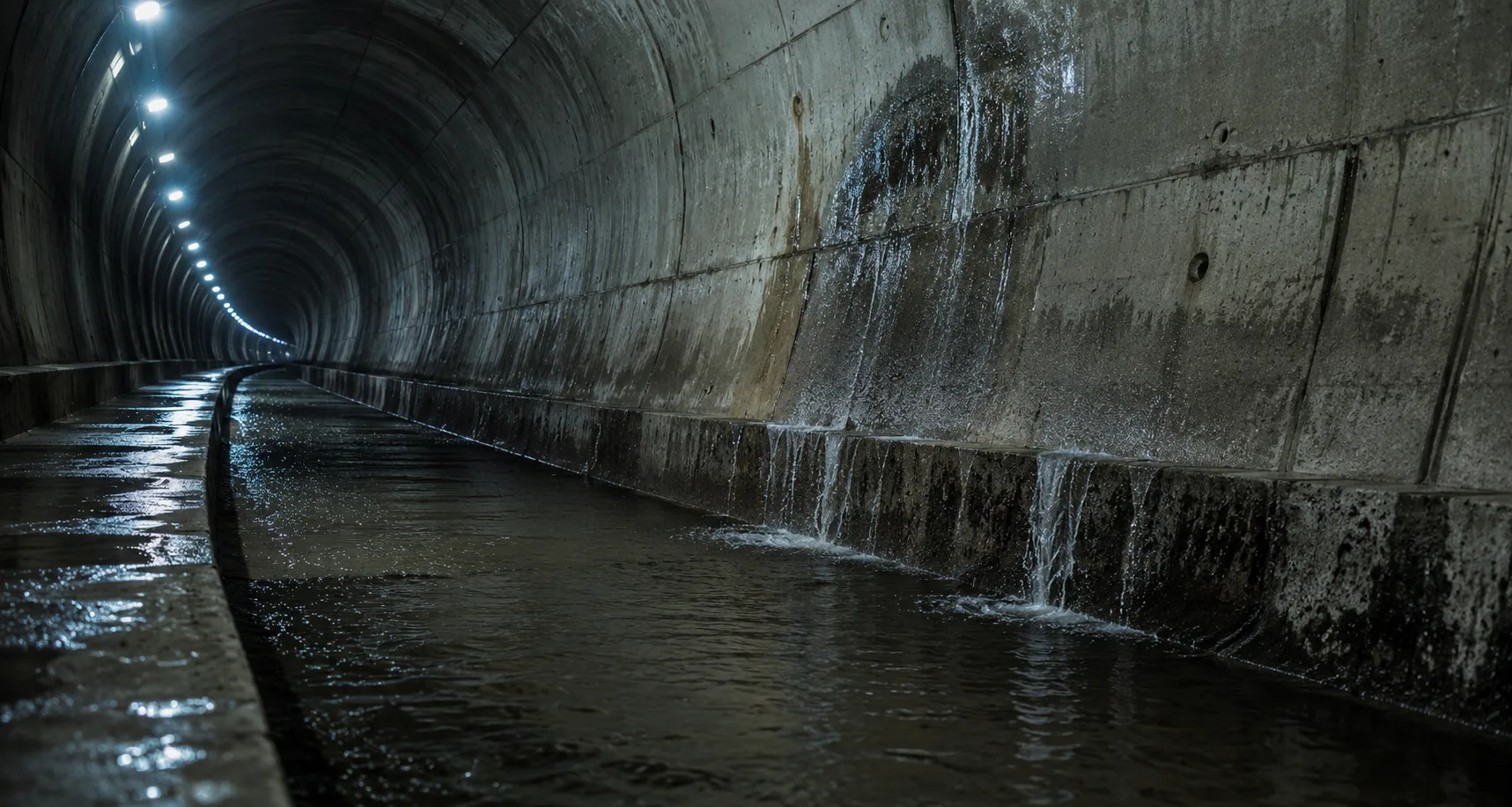
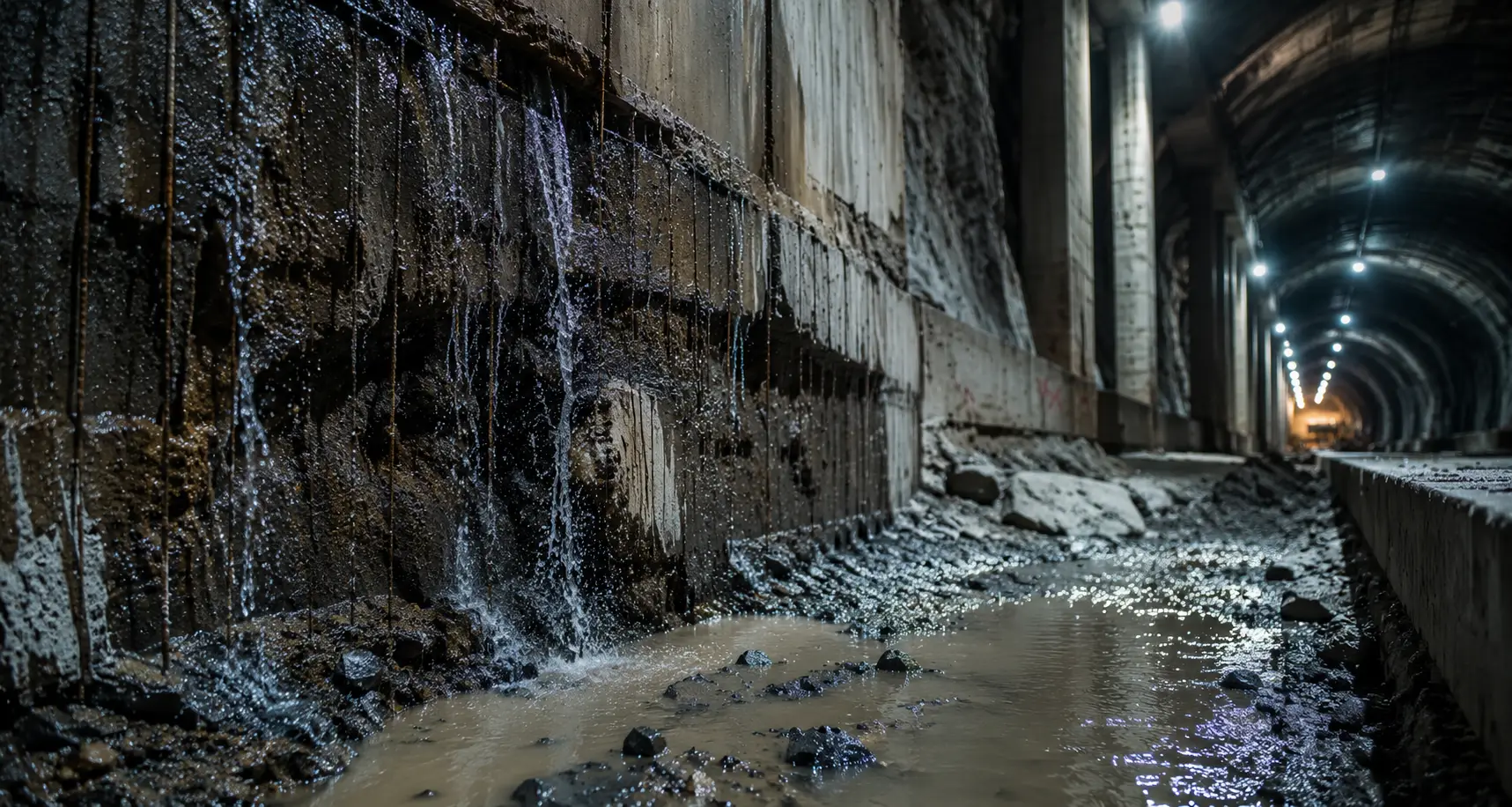
We establish the subsurface geology, water table behavior, and regional groundwater context for the site or structure.
Groundwater Seepage Intelligence, Consulting & Solutions
Seepage intelligence built on hydrogeological investigation, groundwater flow modeling, field verification, and water seepage inspection. The Groundwater Company provides groundwater seepage assessment and investigation services for infrastructure developers, metro rail authorities, tunneling contractors, building owners, and asset managers to identify, assess, and mitigate seepage risk before it threatens structural performance.
Groundwater Seepage Challenges
Seepage is a groundwater behavior problem before it is a structural one. Organizations managing infrastructure and underground assets face a recurring set of conditions:
- Groundwater intrusion into underground structures, often identified only after construction is complete
- Tunnel seepage affecting lining integrity and long-term operational safety
- Basement and foundation seepage in below-grade construction
- High groundwater table conditions that increase intrusion risk across a site
- Construction-stage groundwater ingress that disrupts excavation and build sequencing
- Dam and reservoir seepage with direct implications for structural safety
- Industrial facility seepage risks tied to operational continuity and asset protection
- Long-term structural deterioration driven by sustained, undetected intrusion
- Limited visibility into ground seepage pathways before damage becomes measurable
- Unexpected maintenance costs from reactive, source-unconfirmed repairs
Each of these carries a common root cause: seepage pathways that were never properly identified before action was taken.
How We Approach Groundwater Seepage Investigation
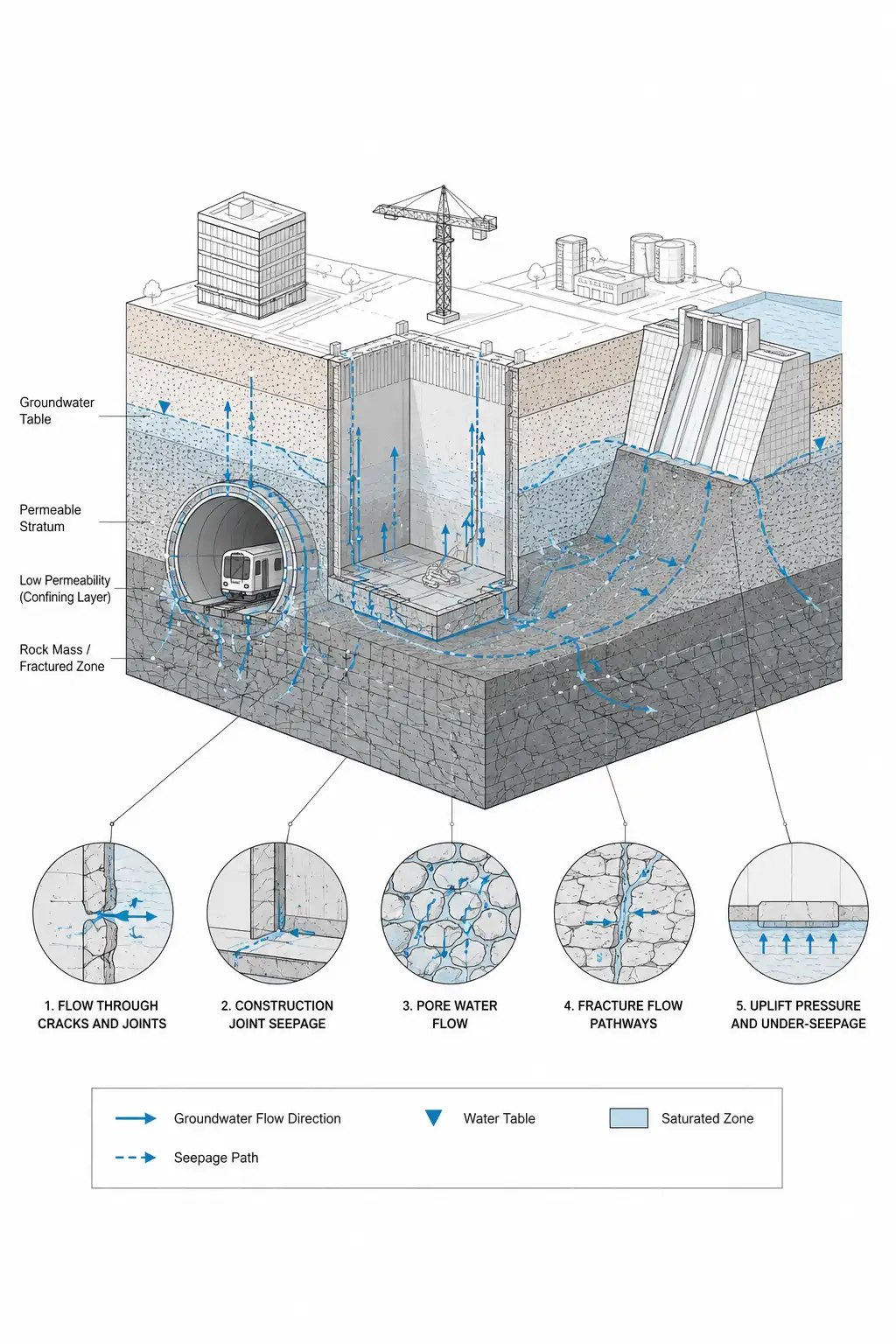
As a groundwater seepage consultant, we treat seepage as a groundwater engineering problem, evaluated through field investigation and modeling, not assumption.
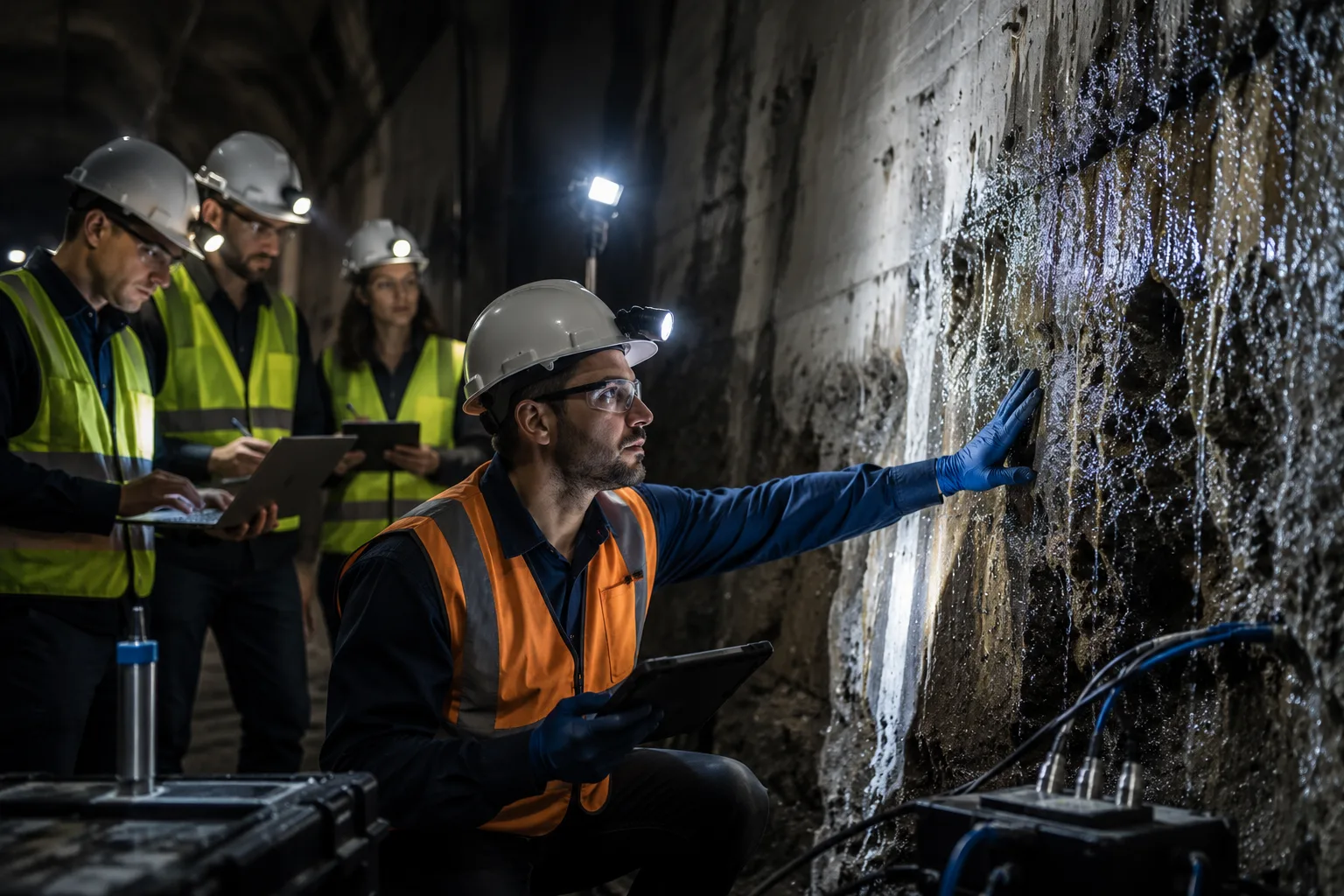
We conduct direct field inspection of the structure and surrounding ground, documenting observable seepage conditions, site history, and potential groundwater entry locations.
We analyze groundwater movement around the structure to understand how flow direction and gradient relate to the seepage condition.
Recent research on hydraulic influences on tunnel performance identifies groundwater-level variation, hydraulic permeability, and water leakage as important factors affecting long-term tunnel performance.
We evaluate groundwater pressure conditions and flow gradients to understand the forces driving seepage behavior.
We model subsurface flow and intrusion behavior to estimate seepage rates, volumes, and likely pathways under current and projected conditions.
Our seepage detection services use field investigation and groundwater analysis to identify and characterize the most likely pathways through which groundwater is entering the structure.
We assess the structural, operational, and regulatory risk the identified seepage pathway represents.
We design a mitigation approach matched to the identified pathway and risk profile, not a generic sealing specification.
We monitor post-mitigation performance to verify the pathway has been addressed and track conditions over time.
Groundwater Seepage Assessment & Intelligence Solutions
Groundwater Ingress & Intrusion Assessment
Field-based groundwater ingress assessment evaluating intrusion conditions, pathways, and risks affecting a structure, site, or asset. Our groundwater seepage services identify the source, pathway, hydraulic conditions, and infrastructure risk before mitigation measures are selected.
Tunnel & Underground Structure Seepage
Seepage investigation for tunnels, shafts, and underground infrastructure, addressing lining performance and long-term safety.
Basement Seepage & Water Ingress Assessment
Diagnostic basement seepage assessment and building seepage investigation to identify groundwater entry pathways affecting foundations and below-grade structural elements in large developments. Basement water ingress assessment also considers groundwater pressure and seasonal water table changes.
Groundwater Flow Modeling
Modeling of subsurface flow and hydraulic gradient behavior to support seepage prediction and infrastructure planning.
Seepage Risk Mapping
Mapping of seepage risk across a structure, site, or multi-asset portfolio to support prioritization.
Infrastructure Condition Assessment
Evaluation of how existing seepage conditions are affecting structural and operational performance.
Monitoring Systems
Instrumentation and reporting frameworks that track seepage behavior and mitigation performance over time.
Remediation & Mitigation Planning
Underground water seepage solutions planned around the identified seepage pathway and the asset's risk profile, with mitigation guided by hydrogeological investigation and modeling.
AI & Hydrogeological
Intelligence
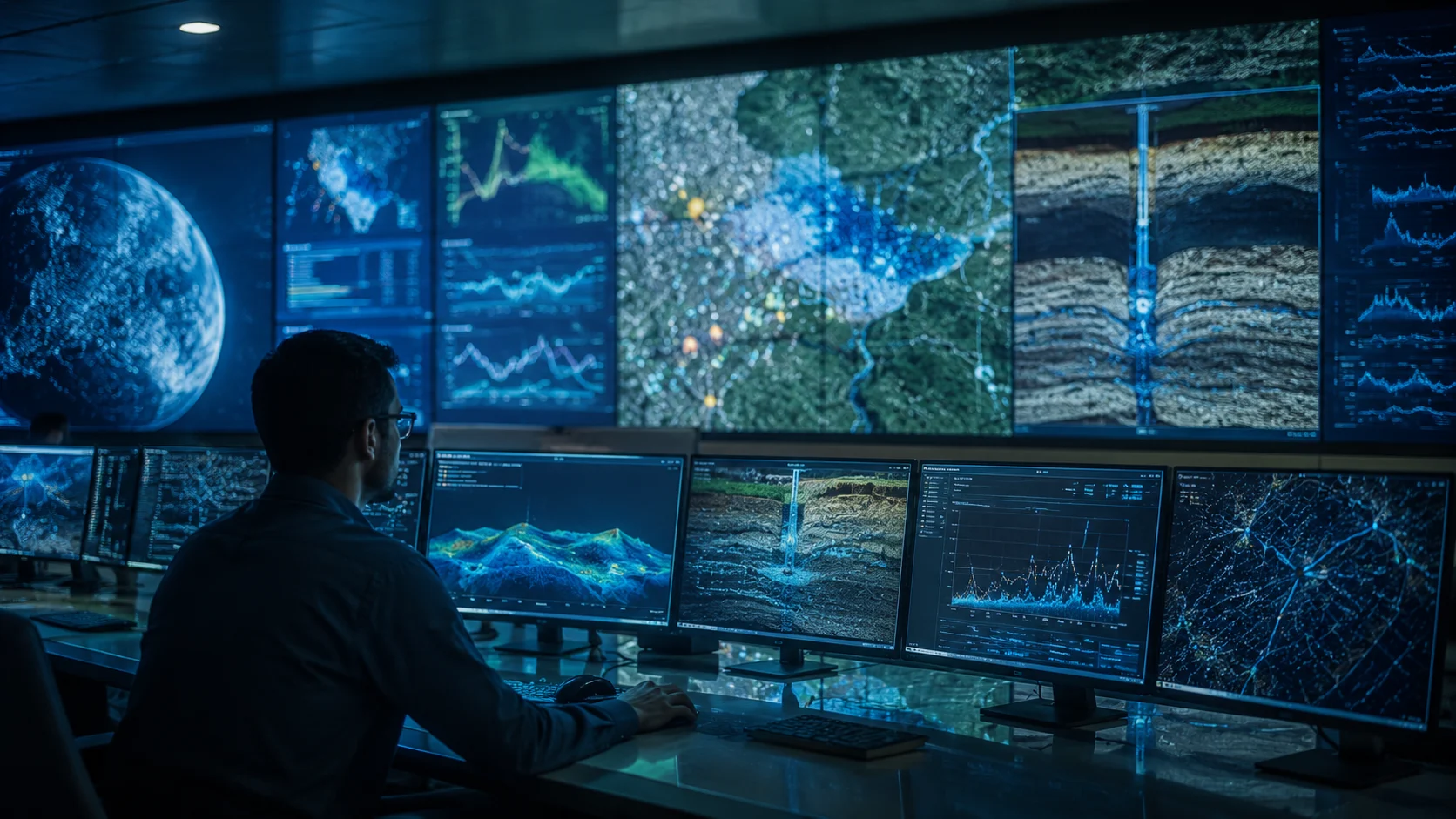
AI supports our hydrogeologists and engineers. It does not replace their judgment.
Groundwater Flow Analysis at Scale
Groundwater flow analysis processed across larger datasets than manual methods allow.
Pattern Recognition
Pattern recognition across monitoring, geological, and groundwater datasets to support seepage pathway identification.
Risk Probability Modeling
Risk probability modeling that ranks seepage conditions by likelihood and severity.
Predictive Groundwater Behavior
Predictive groundwater behavior under varying water table and seasonal conditions.
Infrastructure Impact Forecasting
Infrastructure impact forecasting that links seepage trends to structural risk over time.
Monitoring Optimization
Monitoring optimization that focuses instrumentation on the zones with the highest risk.
Hydrogeologist Validation
Every model output is reviewed and validated by a hydrogeologist before it informs a recommendation.
Documented Uncertainty
Results are presented with documented assumptions, uncertainty ranges, and validation against field observations.
Industries We Support
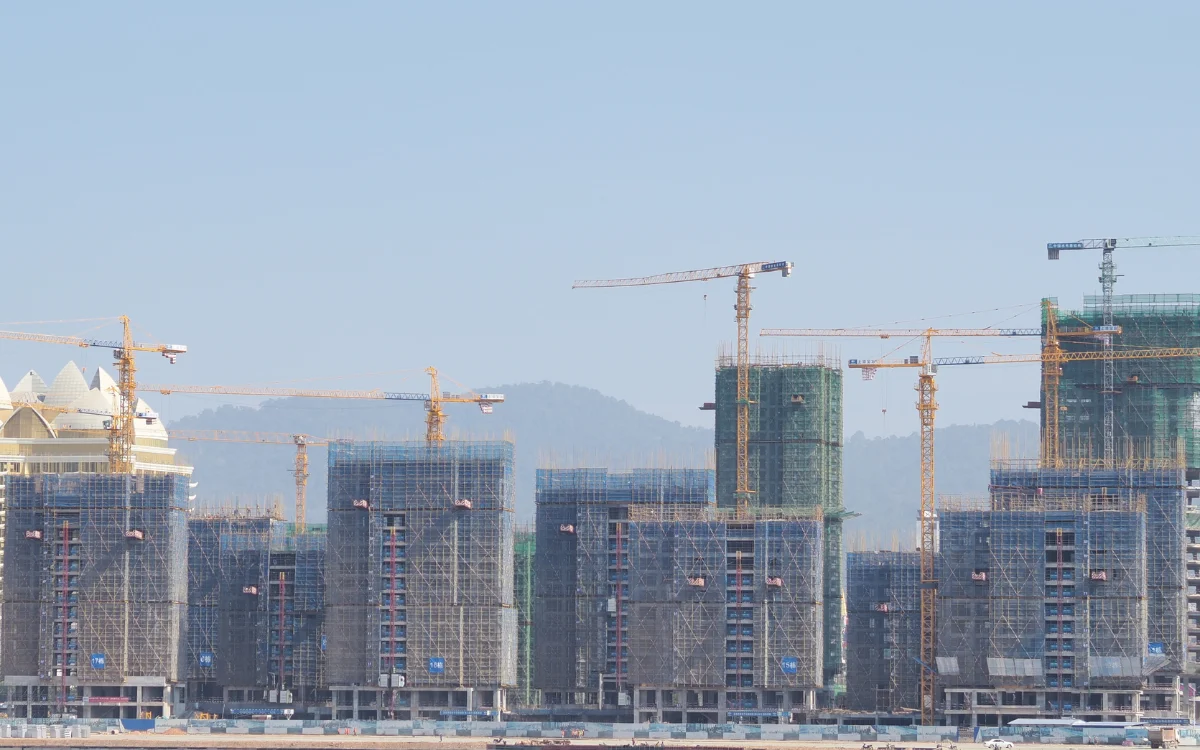
Infrastructure & Urban Development
Seepage risk assessment integrated into large-scale development and right-of-way projects.
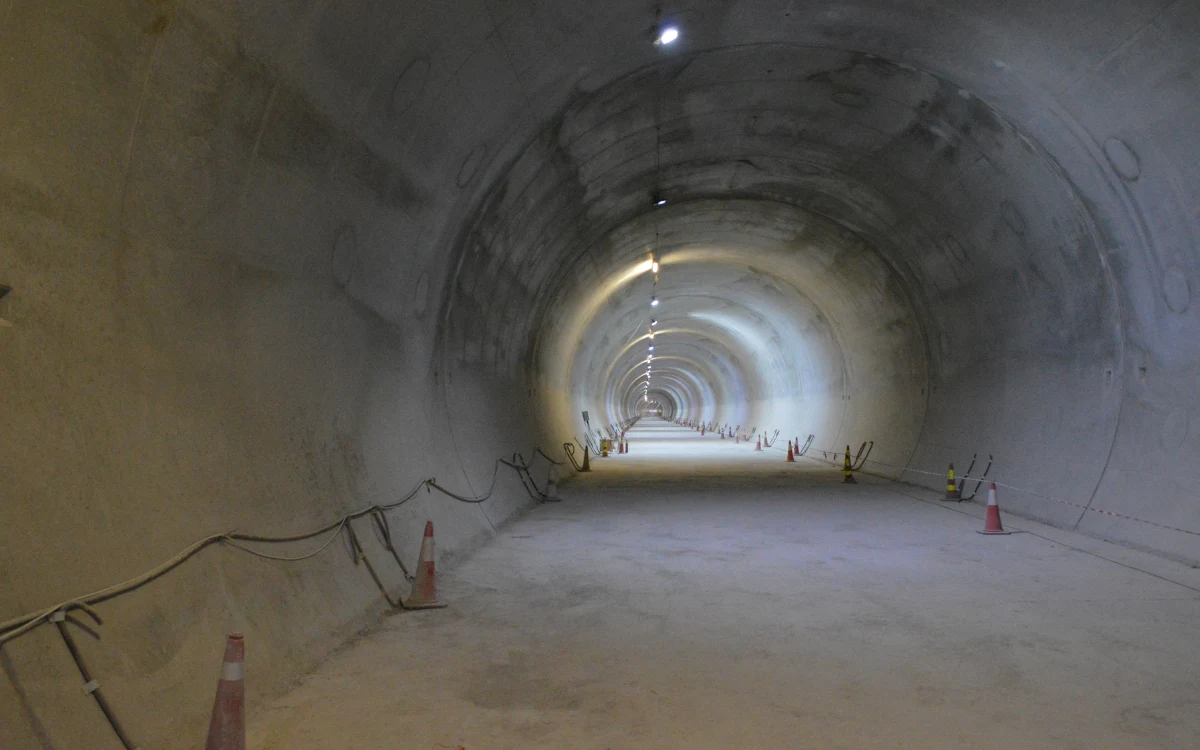
Metro Rail & Tunneling
Seepage and intrusion analysis for tunnel linings, shafts, and underground rail infrastructure.
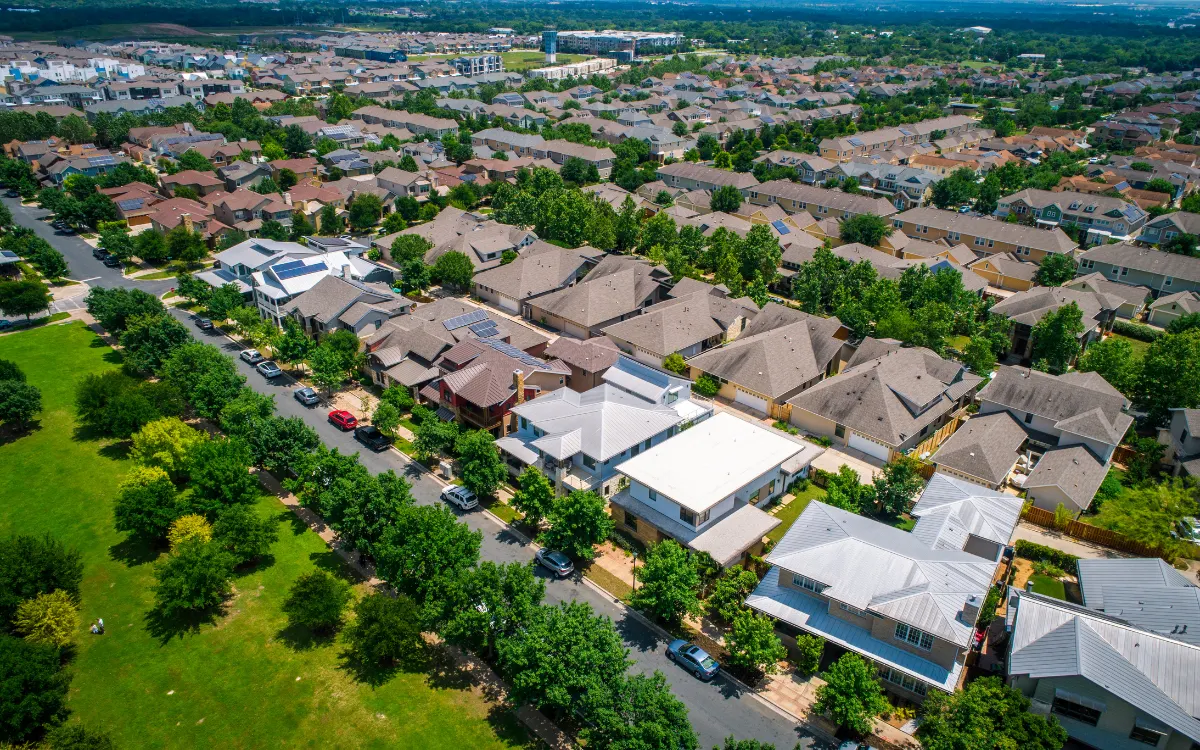
Real Estate & Mixed-Use Developments
Foundation and substructure seepage investigation across large, multi-structure developments.
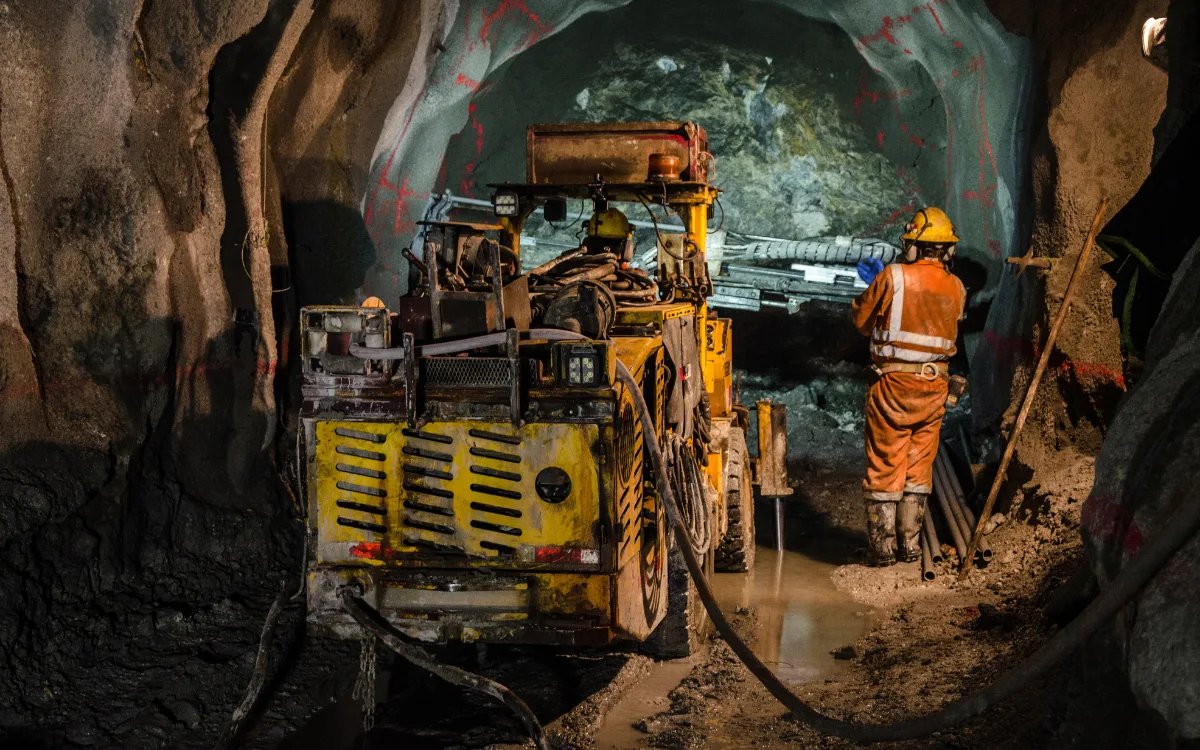
Mining & Underground Works
Seepage and groundwater intrusion assessment for underground operations and shaft construction.
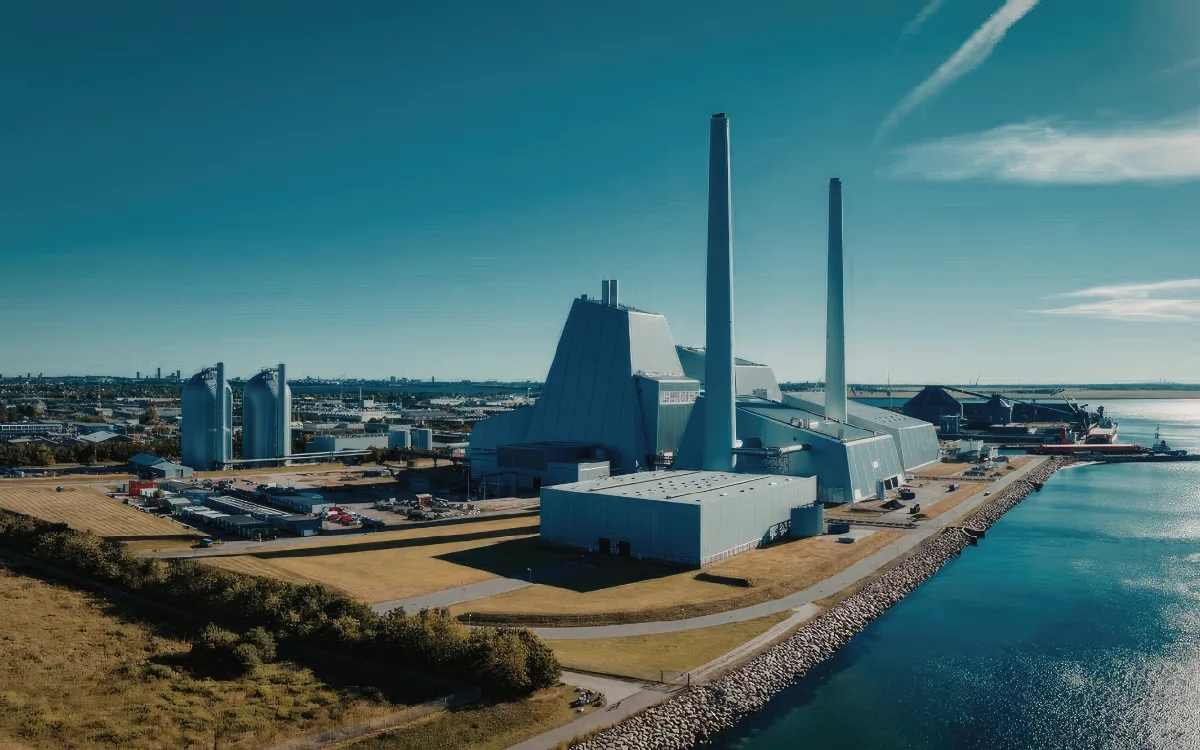
Industrial Facilities
Seepage diagnostics supporting facility integrity and operational continuity.
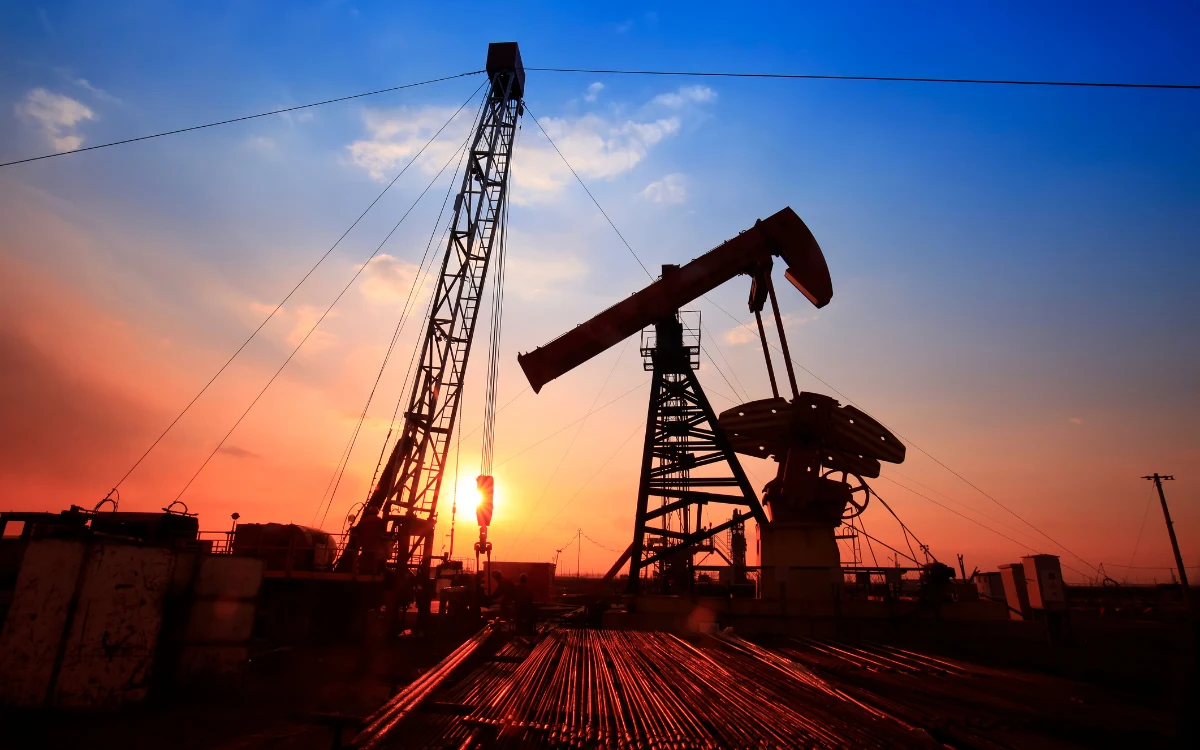
Energy & Utilities
Seepage assessment for power plants, substations, utility corridors, cooling water systems, and related infrastructure.
Government & Municipalities
Technical support for public infrastructure, underground utility corridors, and asset protection programs.
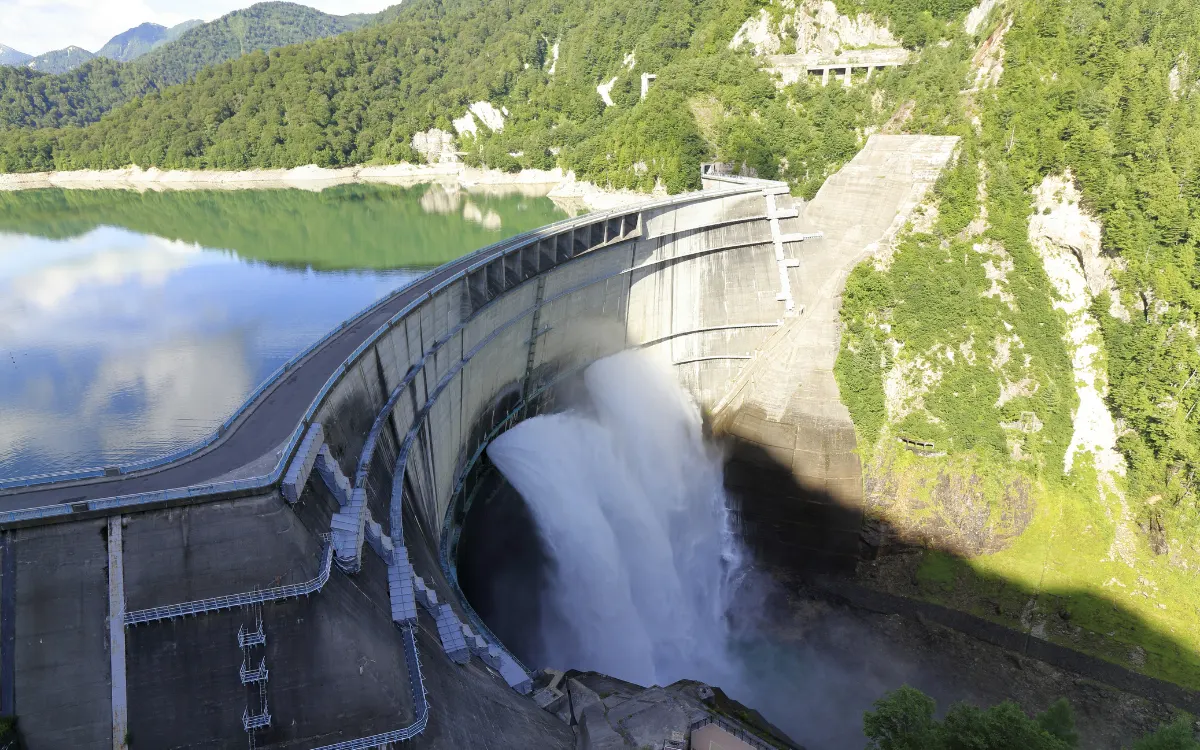
Dams & Reservoirs
Seepage investigation and monitoring with direct implications for structural safety.
Why Organizations Choose The Groundwater Company
Hydrogeological Expertise
Our diagnosis is built on subsurface science, not visible symptoms.
Scientific Rigor
Every seepage assessment is grounded in field data and tested through modeling before mitigation begins.
Field Experience
Our investigations are anchored in direct site work and instrumentation, not desk review.
Mathematical Modeling
We estimate seepage rate, volume, and risk through groundwater flow modeling, replacing assumption with evidence.
Geospatial Intelligence
We map seepage risk across a structure, site, or portfolio, not a single point of failure.
Long-Term Partnership
Seepage conditions change with the water table. We stay engaged through monitoring, not just through project handover.
Remote Sensing & Earth Observation
We incorporate remote sensing data to support site-wide groundwater and seepage assessment where ground-based monitoring alone is insufficient.
Regulatory Understanding
Our documentation is built to meet the scrutiny of regulatory and technical review.
The Groundwater Company Groundwater
Intelligence Solutions
Each solution produces auditable data and decision-ready outputs.
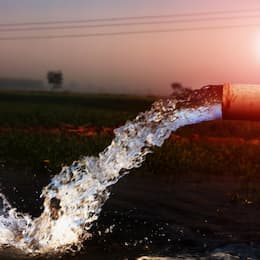
Groundwater Consulting
Aquifer studies, hydrogeological investigations, and long-term management strategies.
View Solution
Recharge & Aquifer Sustainability
Artificial recharge systems and replenishment programs with measurable yield tracking.
View Solution
Groundwater Quality Monitoring
Groundwater quality assessment, contamination monitoring, hydrochemical analysis, and long-term trend intelligence.
View Solution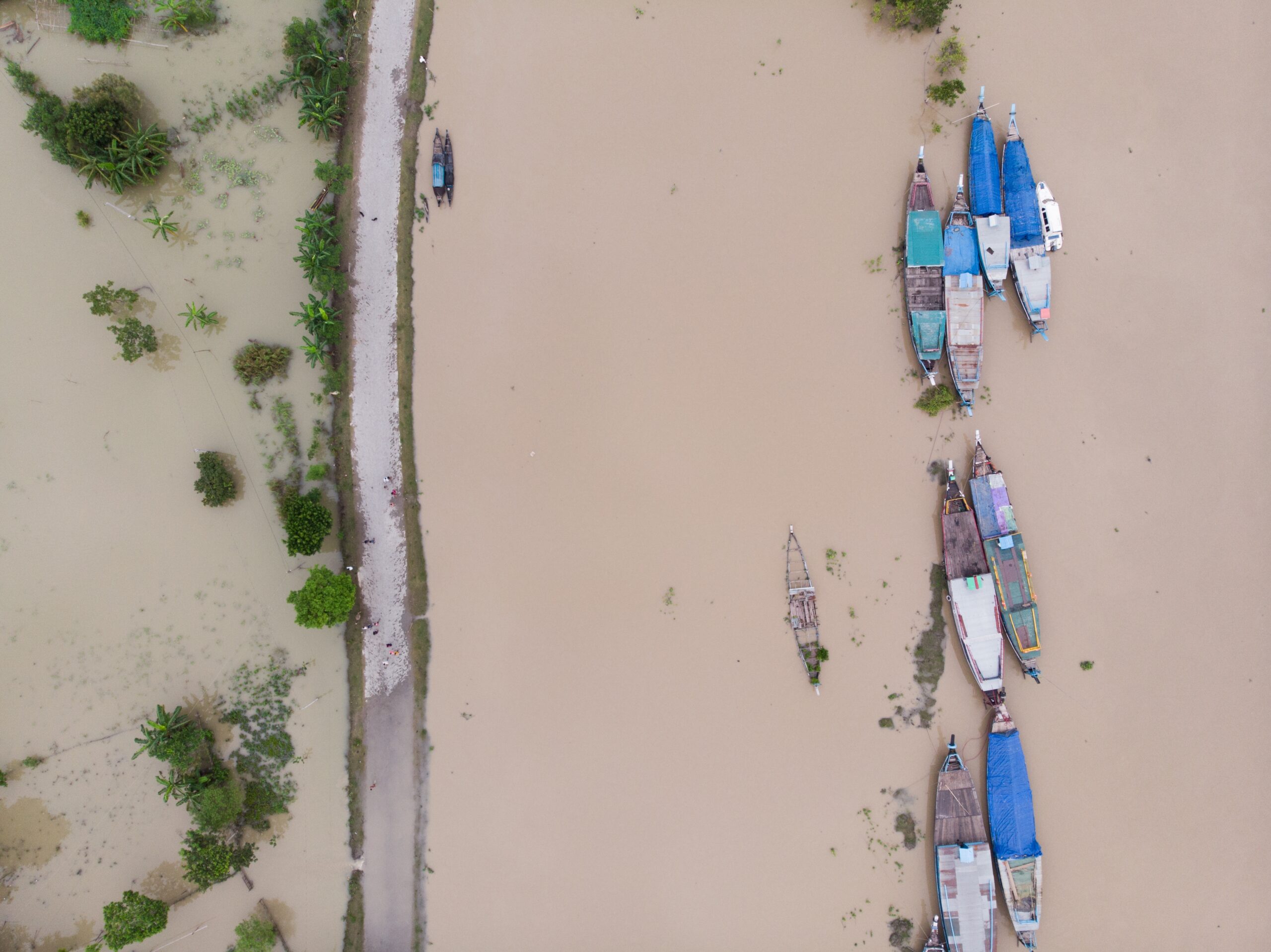
Flood Risk & Resilience
Flood assessment, modelling, mitigation planning, and resilience analysis across surface and groundwater flood sources.
View Solution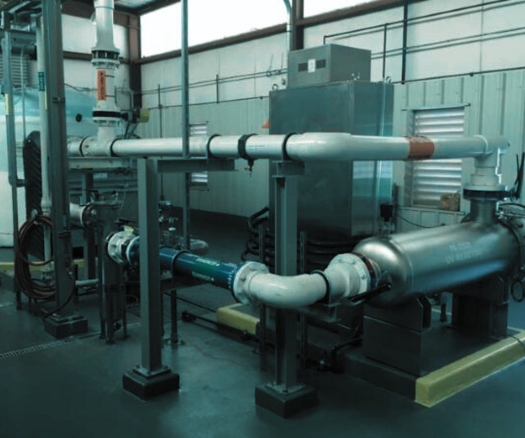
Groundwater Remediation & Recovery
Contaminated groundwater treatment, contaminant transport modelling, and regulatory closure.
View Solution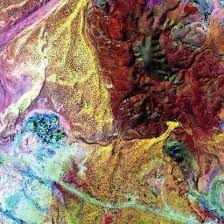
Rock & Geological Mapping
Subsurface investigations and geotechnical intelligence for mining and tunneling.
View Solution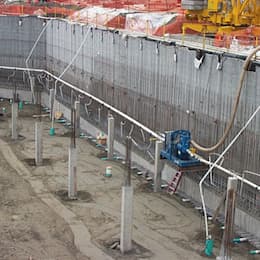
Groundwater Seepage Investigation
Water intrusion diagnostics for construction, metro rail, and underground structures.
Current Solution
Water Risk Assessment
Risk assessment covering groundwater, water quality, supply, regulatory, operational, and sustainability exposure.
View Solution
Integrated Water Resource Management
Integrated planning across water supply, demand, allocation, sustainability, and long-term resource management.
View Solution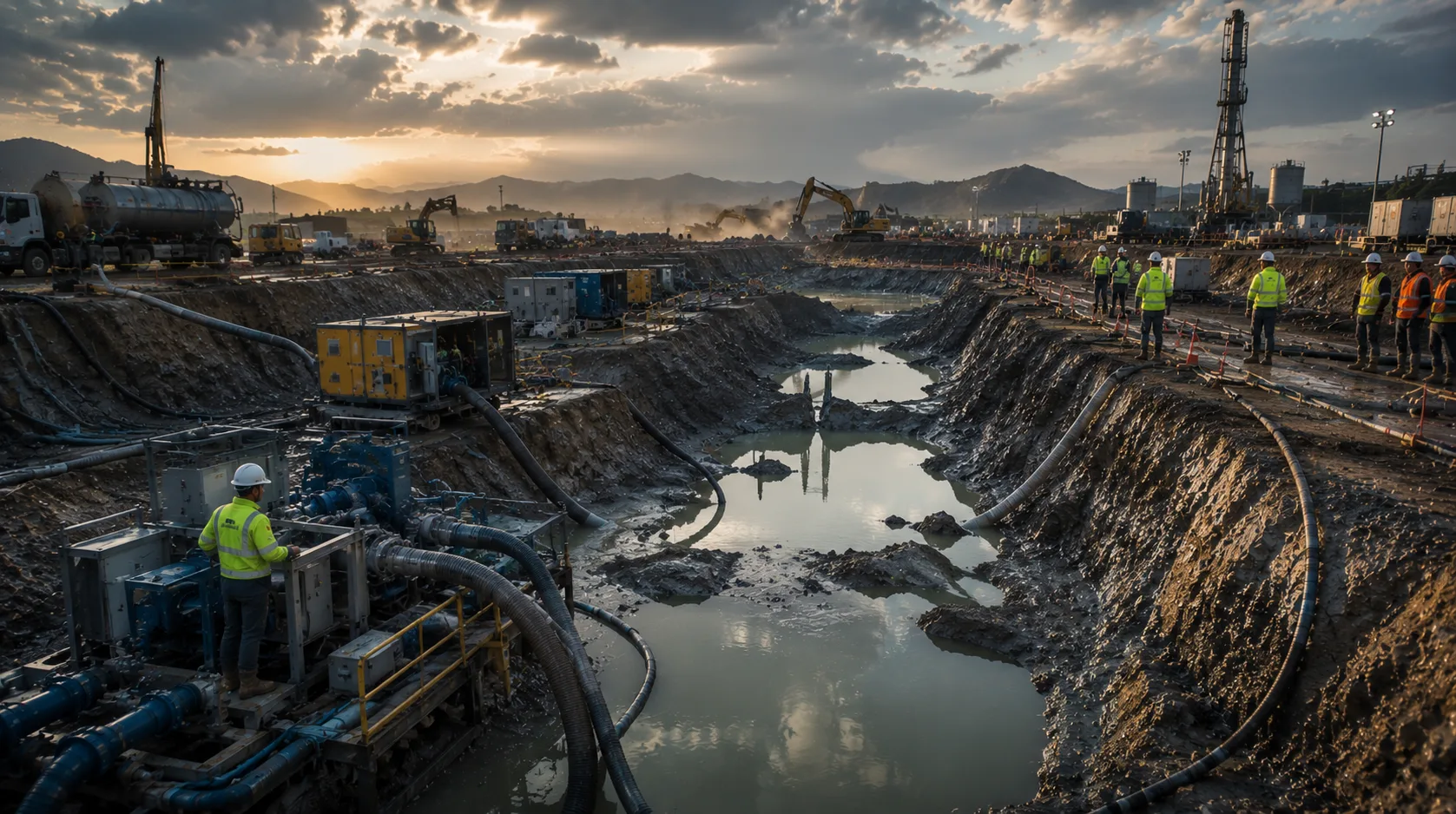
Dewatering Solutions
Groundwater control, dewatering assessment, system design, and management for construction, excavation, and mining projects.
View Solution
Soil Remediation
Contaminated land assessment and soil remediation for brownfield and industrial sites, with documentation supporting safe reuse.
View SolutionDiscuss Your Seepage Challenge
If seepage affects the structural integrity, safety case, or operational continuity of your infrastructure, the next step is a technical investigation, not a sealing quote.