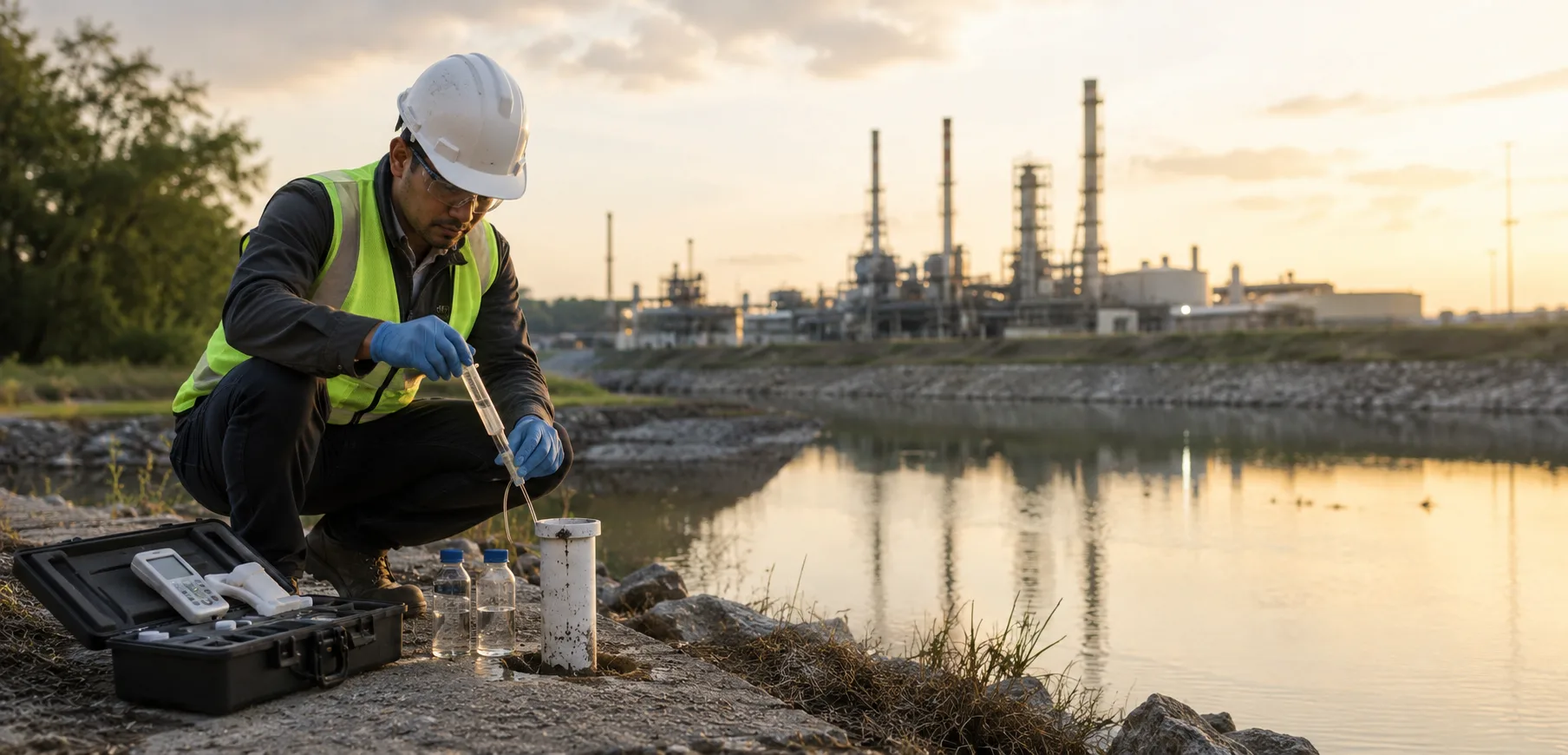
Industrial Contamination
Industrial facilities affect groundwater quality through process water releases, chemical storage, hydrocarbon migration, heavy metals, and historical contamination from prior land use.

The Groundwater Company develops groundwater monitoring and assessment programs around site hydrogeology, contamination pathways, regulatory requirements, and operational risks. Our groundwater quality monitoring combines field investigation, real-time systems, groundwater quality assessment, and groundwater quality analysis to produce decision-ready groundwater intelligence.
Groundwater is one of the most important freshwater resources supporting drinking water supply, industrial operations, energy production, mining, and urban development. As industrialization, climate variability, urban expansion, and environmental pressures increase, groundwater quality has become a strategic concern for organizations managing water security, regulatory compliance, and long-term operational continuity.
Groundwater quality is not a static condition. It changes with land use, operational activity, seasonal variation, contamination events, and infrastructure age. Organizations that monitor reactively, after a problem surfaces, consistently face higher corrective action costs, greater regulatory exposure, and more complex liability than those with monitoring programs designed to detect change before it becomes damage.
Common situations where groundwater quality intelligence is absent or insufficient:
Each of these situations is a risk management gap. The monitoring program is the instrument through which that gap is closed.
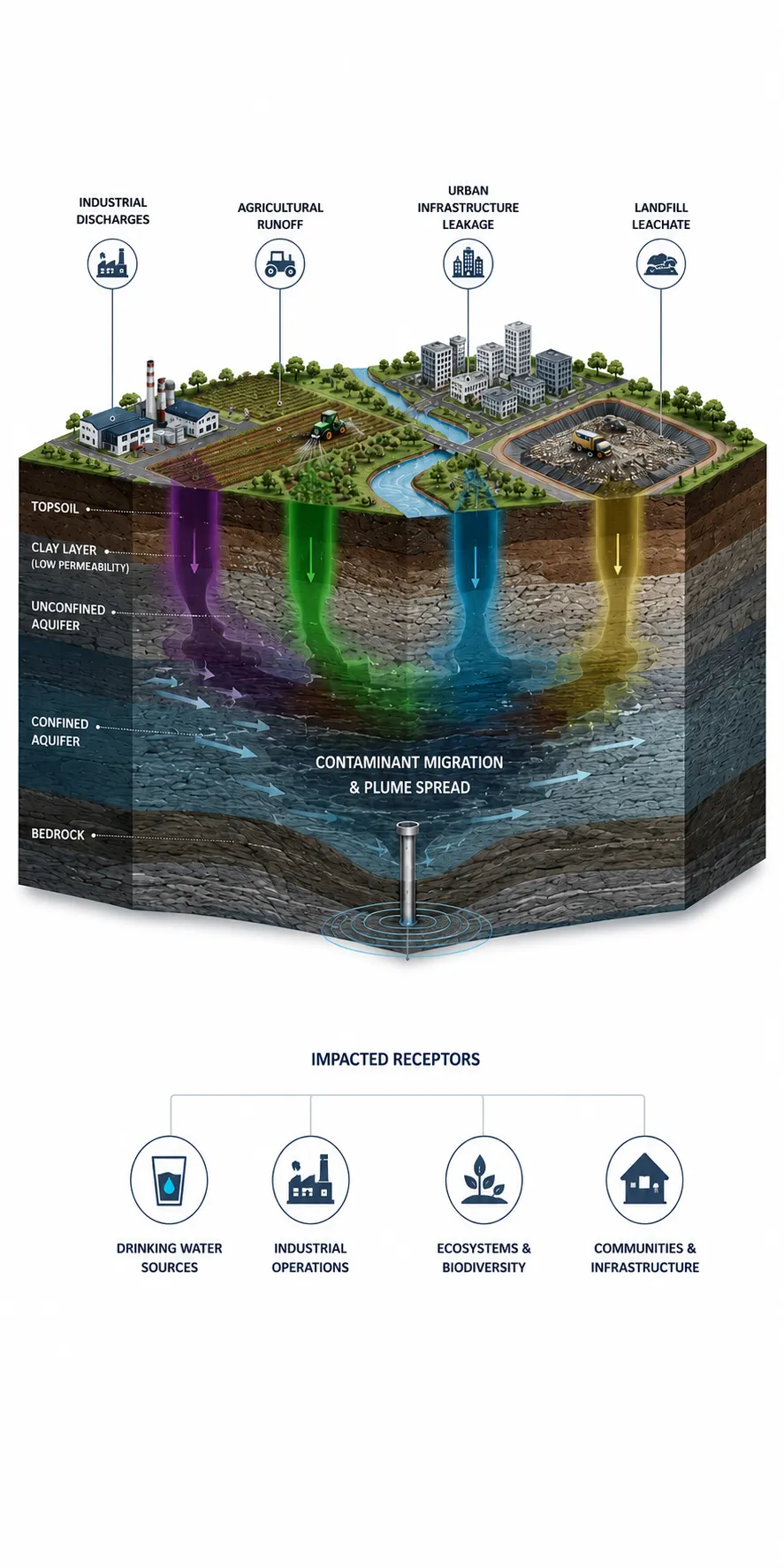
The groundwater quality issues organizations face are rarely isolated sampling problems. They are site, aquifer, and risk management problems that need hydrogeological context and a monitoring program designed to reveal change before it escalates.
Monitoring design, contamination understanding, and long-term groundwater intelligence in one program structure
Industrial facilities affect groundwater quality through process water releases, chemical storage, hydrocarbon migration, heavy metals, and historical contamination from prior land use.
Many aquifers naturally contain elevated concentrations of arsenic, fluoride, salinity, iron, manganese, and other constituents that require formal assessment and long-term management before they create health, regulatory, or operational problems. UNESCO provides global groundwater quality data covering groundwater quality conditions and contaminants across regions.
Former industrial facilities, brownfield sites, and historical land uses create sustained groundwater quality risk that often extends well beyond the original operational footprint.
Fertilizers, pesticides, nutrient loading, and agricultural runoff affect groundwater quality across large regions, often incrementally and over extended timeframes that point-in-time sampling cannot adequately characterize.
Rapid urbanization introduces contamination from sewage leakage, stormwater infiltration, landfills, and aging infrastructure, particularly in areas with shallow water tables.
Changing recharge patterns, groundwater depletion, seawater intrusion into coastal aquifers, and extreme weather events alter groundwater quality conditions over time in ways that require trend-based monitoring to detect.
Data collection is the starting point, not the outcome. Our monitoring engagements are structured to move from program design through field work to interpretation and decision-relevant reporting.
Through groundwater consulting and hydrogeological assessment, we evaluate aquifer characteristics, groundwater flow dynamics, recharge zones, geological controls, and potential contamination pathways before any monitoring network is positioned.
We design the monitoring network based on site hydrogeology, flow direction, contamination risk zones, and regulatory requirements. Poorly positioned monitoring points produce data that cannot answer the questions the program was commissioned to address.
We conduct field sampling programs to established protocols, including chain of custody documentation, field parameter measurement, and sample integrity procedures.
Where continuous groundwater quality data is required, we design and deploy real-time monitoring systems with telemetry and data management infrastructure calibrated to site-specific parameters and alert thresholds. Selected groundwater quality parameters can be monitored continuously through telemetry-enabled systems, while others require periodic laboratory analysis.
Physical, chemical, and biological parameters are evaluated against QA/QC protocols and accredited laboratory standards to ensure analytical results are defensible under regulatory and technical review.
Groundwater quality data is integrated with geological, hydrological, and environmental datasets to identify spatial patterns, trends, and anomalies across the site.
Our water risk assessment considers potential contamination migration, aquifer vulnerability, and groundwater quality scenarios under current and projected conditions, presenting results with documented assumptions and uncertainty ranges.
Where contamination is indicated, we assess plume extent, migration behavior, and risk to receptors using monitoring data, hydrogeological understanding, and predictive analysis.
We prepare monitoring reports structured to meet regulatory submission requirements, with clear documentation of methods, results, uncertainty, and interpretation.
We review monitoring program performance against its original objectives and adjust network design, sampling frequency, or analytical parameters as site conditions and knowledge evolve.
Parameter selection is defined by site history, operational context, regulatory requirements, and the specific groundwater quality questions the monitoring program is designed to answer.
Field-measurable indicators of groundwater condition and movement.
Core chemistry parameters for water quality and regulatory compliance.
Priority metals associated with industrial activity and natural geology.
Organic compounds linked to fuel, solvent, and process chemical use.
Microbial parameters for drinking water safety and sanitation risk.
Every monitoring program is scoped to the site's specific risk profile, regulatory setting, and operational history. Parameters are not templated.
Systematic groundwater quality assessment of conditions across a site before development, acquisition, or operations commence. Establishes the evidential foundation for all subsequent groundwater monitoring programs and compliance work.
Hydrogeologically informed design of groundwater monitoring networks, including monitoring well placement, sampling point positioning, and sensor deployment, structured to intercept groundwater flow and detect quality changes at the relevant scale.
Design and technical oversight of monitoring well construction, including selection of appropriate well type based on aquifer conditions, investigation depth, and program objectives. Network performance is reviewed over time and adjusted as site understanding develops.
Our groundwater testing services combine structured field sampling, laboratory testing, hydrogeological interpretation, and QA/QC. Physical, chemical, and microbiological parameters are evaluated under documented protocols with full chain of custody.
Continuous monitoring systems for sites where detection speed matters: active contamination zones, operational facilities with ongoing discharge risk, and infrastructure where groundwater quality directly affects operational decisions.
Identification of contamination sources, migration pathways, and the spatial extent of affected groundwater systems through field investigation and analytical interpretation.
Groundwater quality analysis converts field and laboratory results into trends, contamination indicators, spatial patterns, and decision-relevant findings that point-in-time review cannot reveal.
Our groundwater monitoring services support baseline studies, regulatory compliance, contamination investigations, industrial operations, and long-term programs. Each scope is designed and reported against the relevant regulatory frameworks, permit conditions, and environmental licence requirements.
Groundwater quality investigations supporting acquisitions, infrastructure development, industrial expansion, and environmental risk assessment ahead of investment or planning decisions.
Monitoring of groundwater quality conditions during corrective action, environmental restoration, and groundwater remediation programs, tracking progress against defined targets and documenting performance.
Monitoring of coastal and near-coastal aquifer systems for salinity intrusion, seawater encroachment, and chloride concentration trends. Program design accounts for tidal influence, seasonal variation, and long-term groundwater level changes that affect intrusion behavior.
Monitoring data collection, verification, and reporting structured to support GRI-aligned sustainability reporting and SDG 6-related water stewardship initiatives where applicable.
Independent groundwater quality audit of existing monitoring programs, network adequacy, data quality, and reporting. Provides an objective assessment of whether the program is answering the questions it was designed to address, including groundwater quality testing protocols and chain of custody procedures.

Traditional groundwater monitoring often generates large volumes of data without providing meaningful decision support. The Groundwater Company combines groundwater quality data with hydrogeological expertise, geospatial analysis, environmental intelligence, and AI-assisted assessment to identify patterns, emerging risks, and future scenarios, enabling organizations to move from reactive reporting to proactive groundwater quality management.
Trend detection across large time-series datasets, identifying parameter changes that manual review would not reliably detect at scale.
Groundwater quality anomaly detection flags readings that deviate from established site behavior before they surface in a quarterly summary.
Monitoring data supports spatial and temporal analysis of plume behavior under documented assumptions and uncertainty ranges.
Analytical review identifies gaps in spatial coverage or sampling frequency that reduce detection capability.
Geological, hydrological, and environmental datasets are integrated to reveal groundwater quality vulnerability patterns across the site or basin.
Site-specific early warning systems are configured to parameters and alert thresholds that matter for groundwater quality deterioration.
Every analytical output is reviewed and interpreted by an experienced hydrogeologist or environmental engineer before it reaches a client or a regulatory submission.
We present trend interpretations and predictive outputs with documented assumptions and uncertainty ranges, not as fixed conclusions about groundwater behavior.
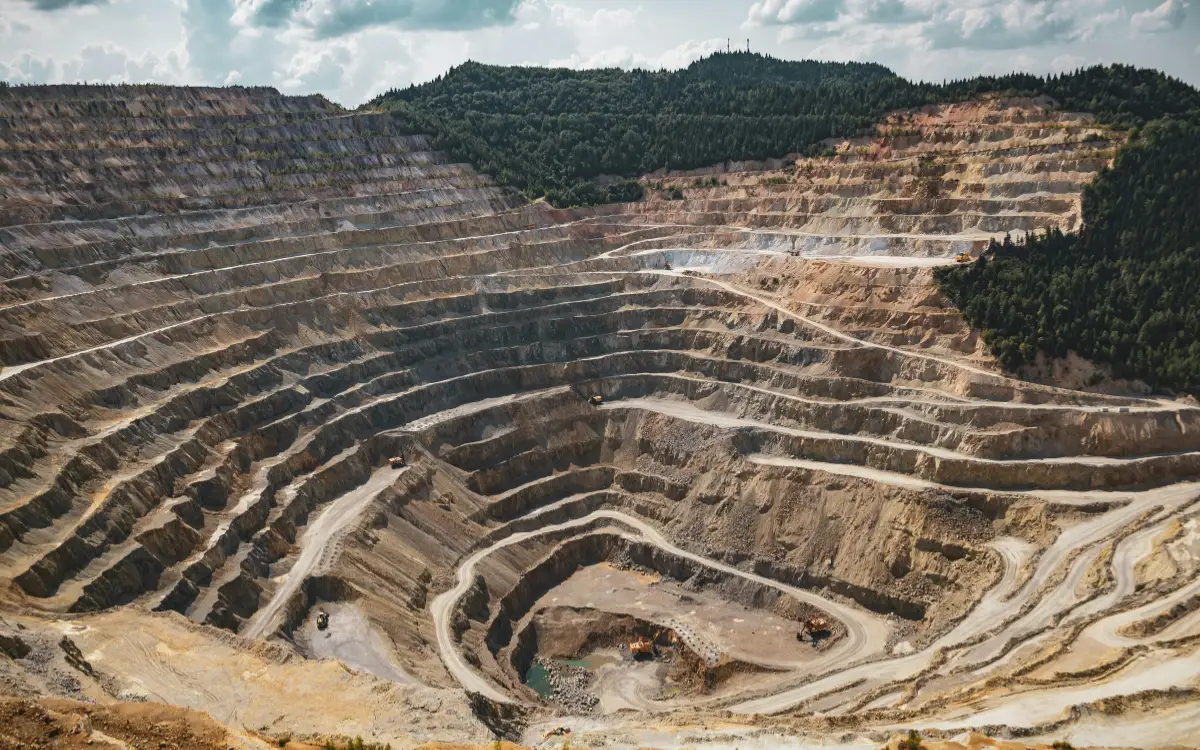
Groundwater quality monitoring for mine sites, tailings facilities, heap leach operations, and post-closure water management programs.
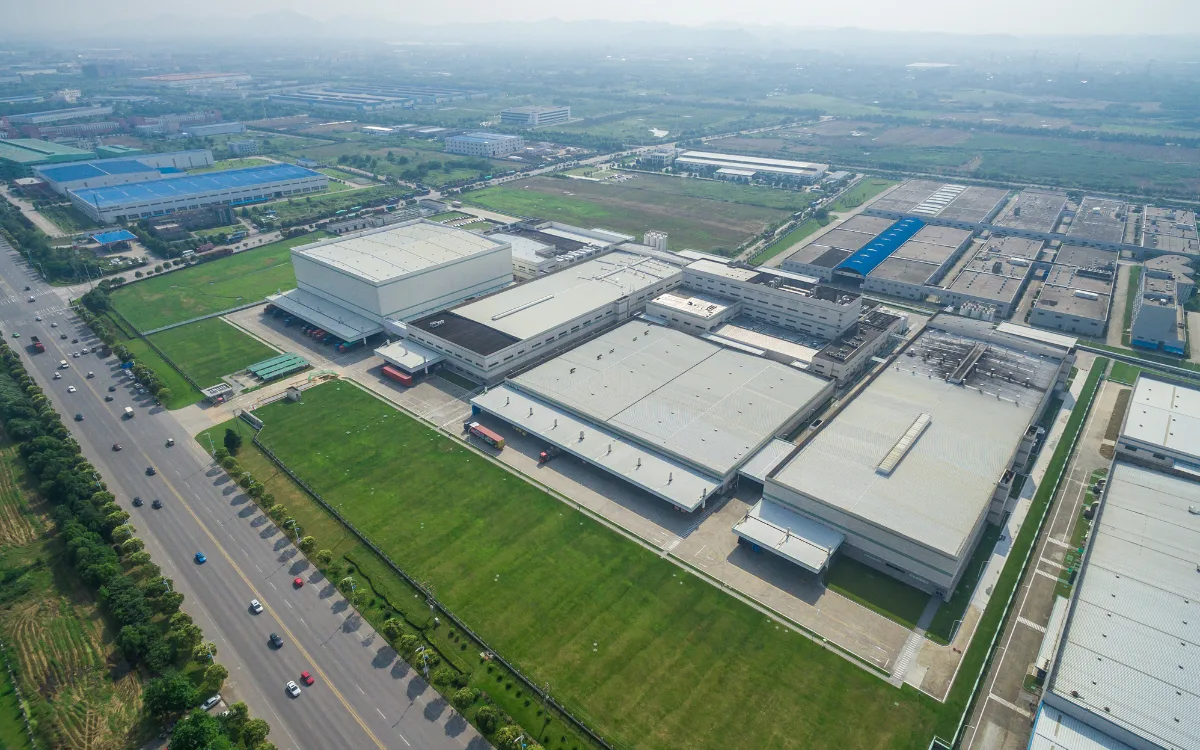
Industrial groundwater monitoring may combine monitoring wells, periodic sampling, laboratory analysis, contamination detection, compliance monitoring, and real-time systems according to site risk.
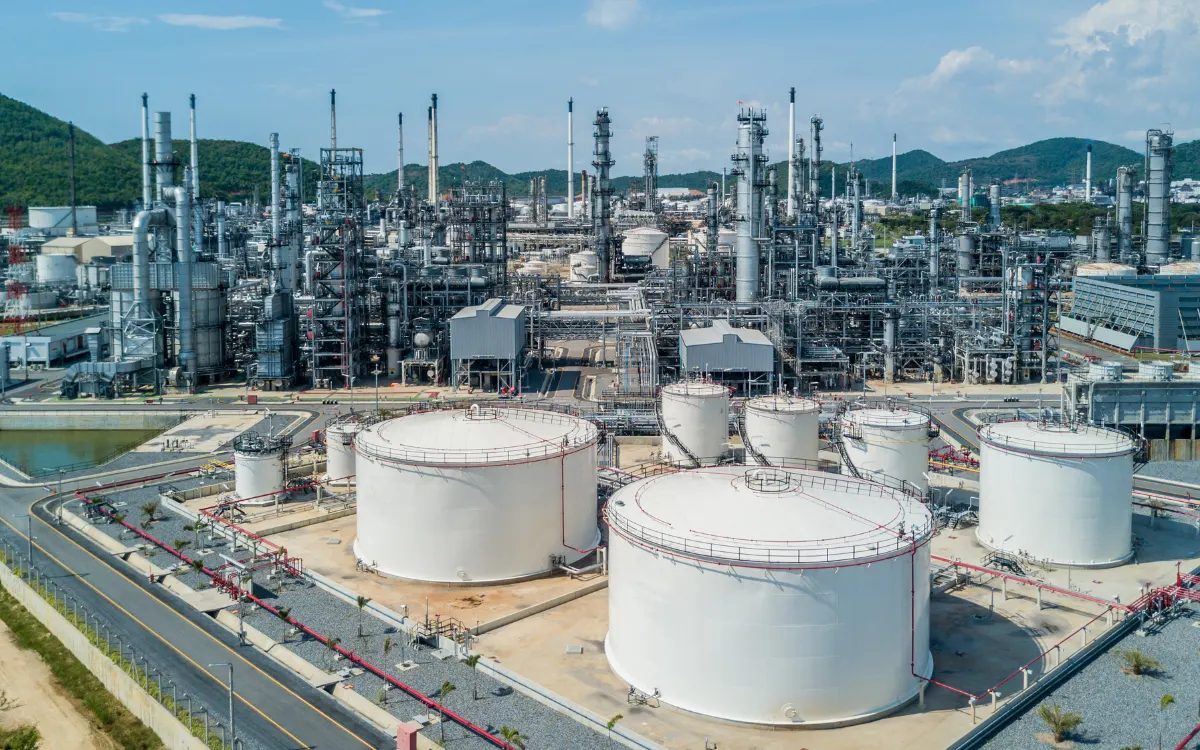
Monitoring of groundwater quality risks associated with storage, production, processing, and pipeline infrastructure.
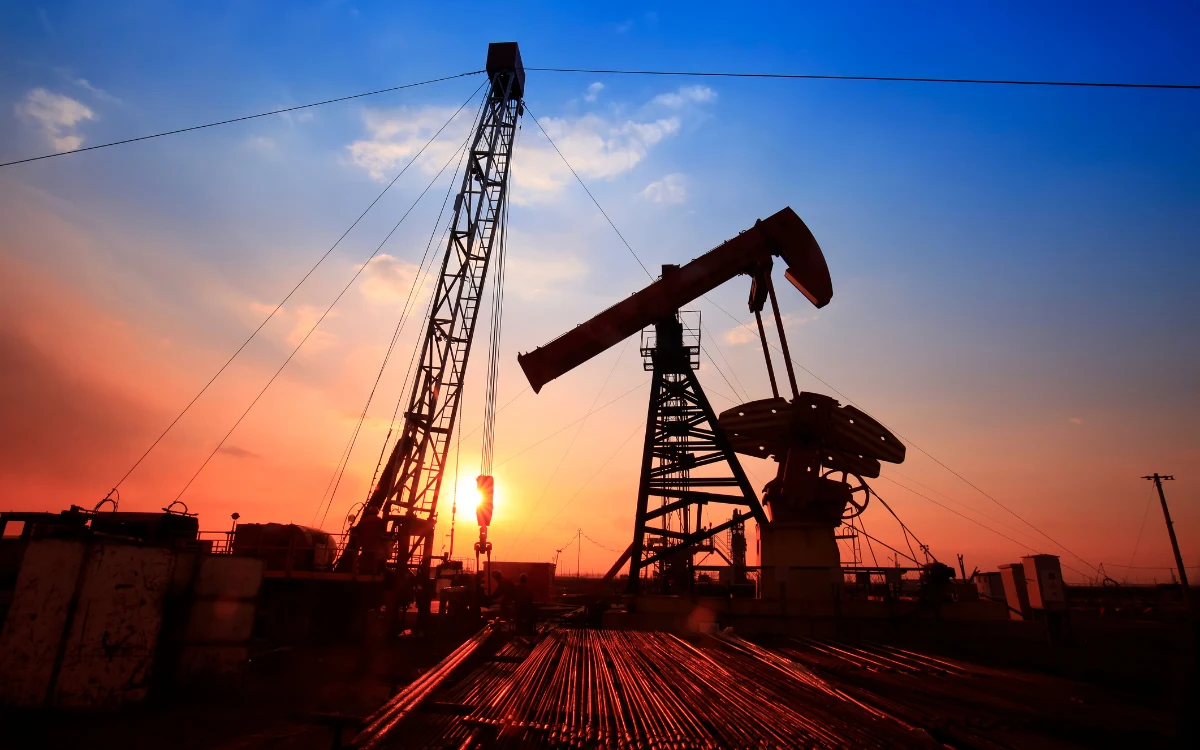
Groundwater quality monitoring for power plant sites, cooling water systems, fuel storage, and energy infrastructure with subsurface contamination risk.
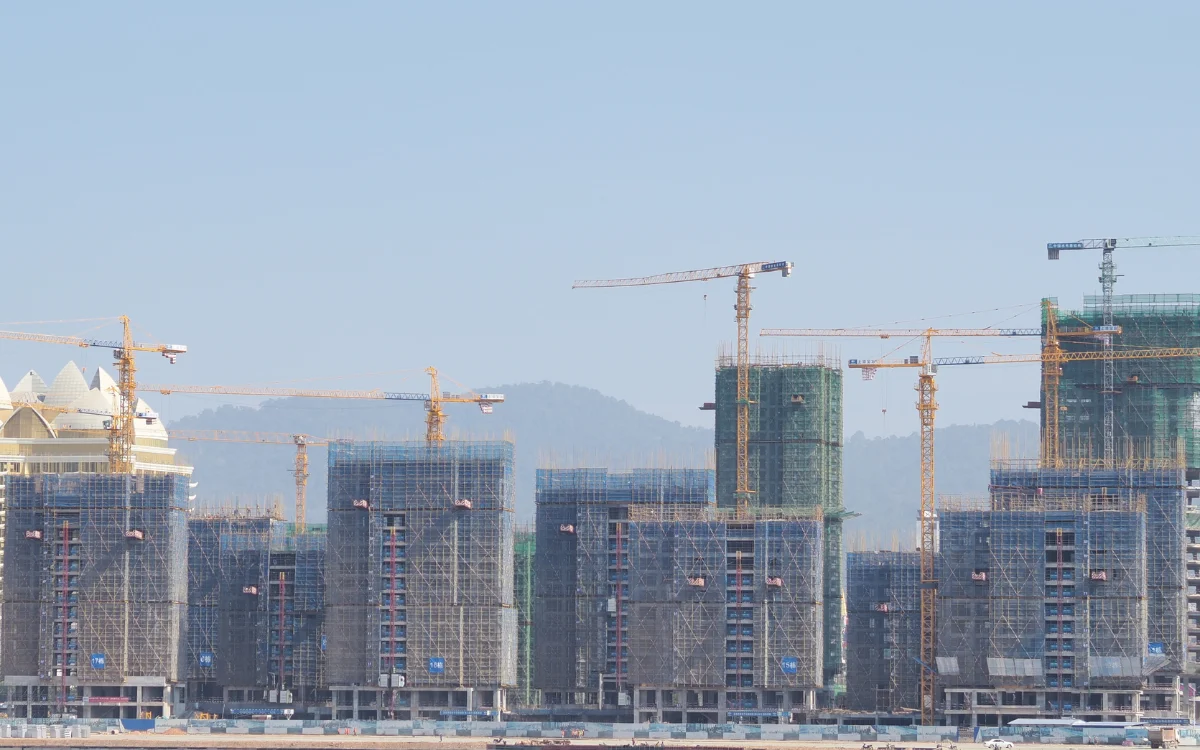
Baseline and construction-phase groundwater quality monitoring for large developments, transport corridors, and urban infrastructure projects.

Technical monitoring program design, independent review, and reporting for public groundwater resource protection and regulatory compliance programs.
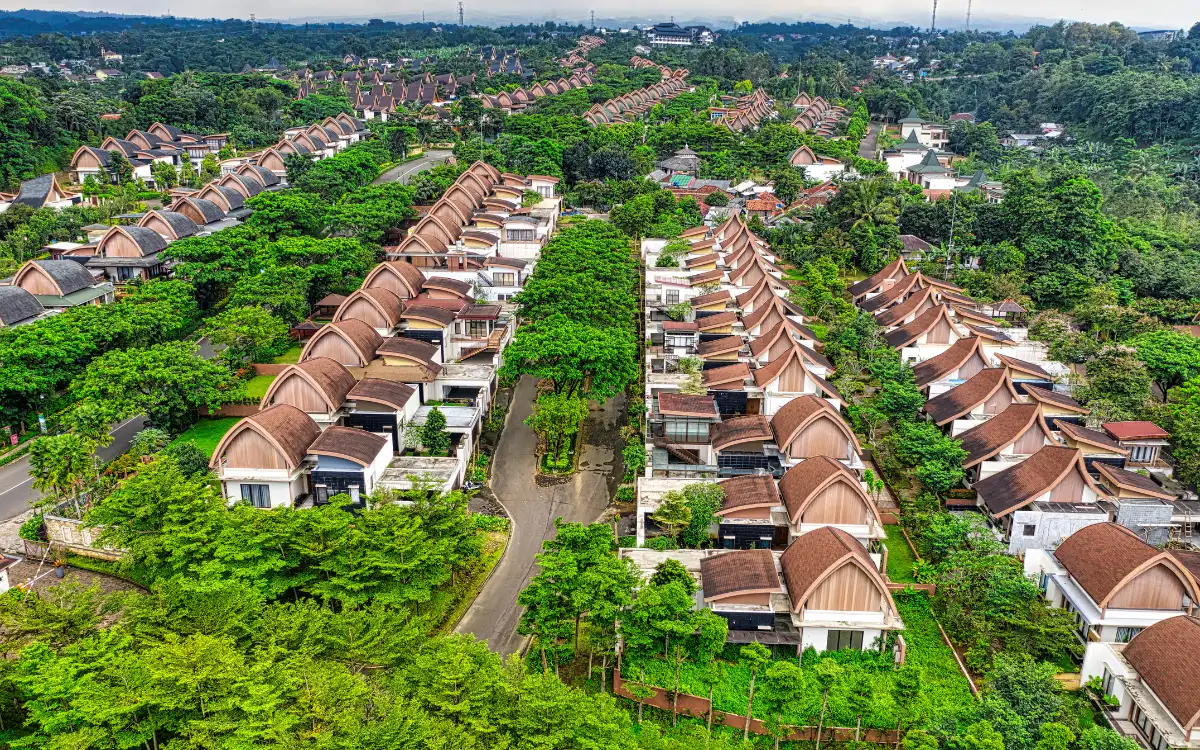
Pre-acquisition baseline assessment, due diligence monitoring, and ongoing compliance monitoring for large-footprint commercial and mixed-use developments.
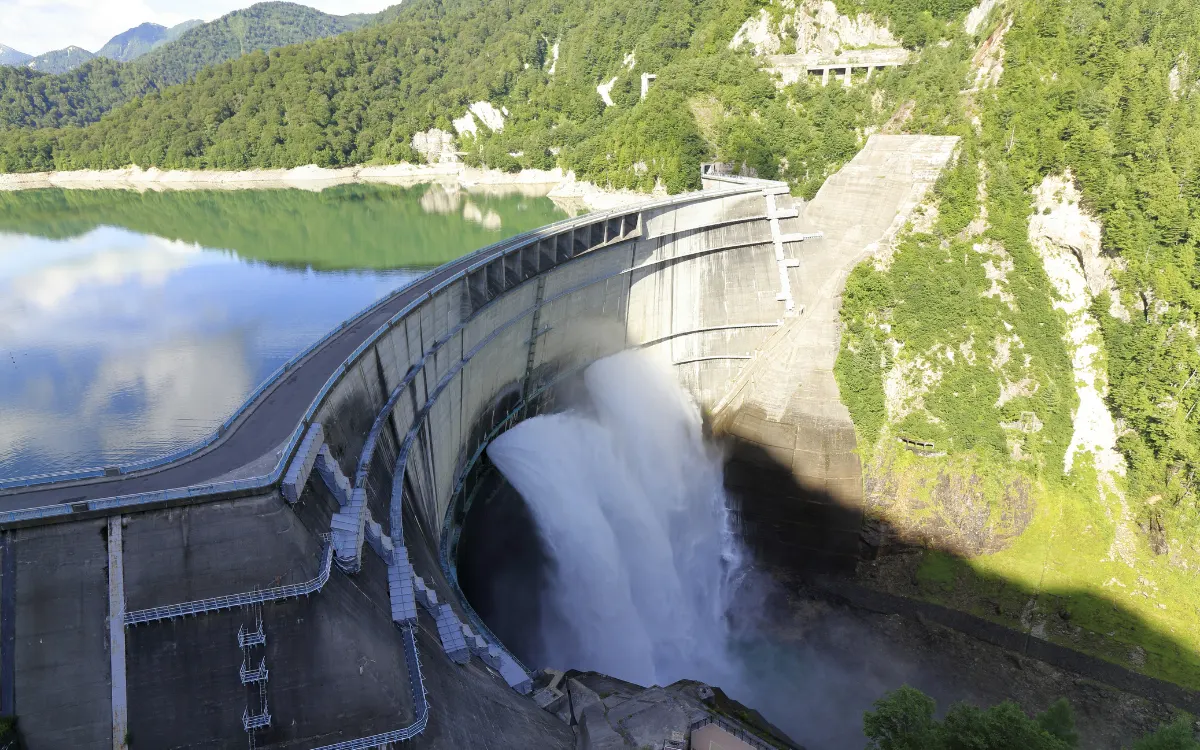
Groundwater quality monitoring downstream of storage infrastructure, including groundwater seepage quality assessment and long-term water balance monitoring.
Monitoring program design supporting integrated water resource management for groundwater sources contributing to municipal supply, covering quality parameters relevant to drinking water standards.
Groundwater quality monitoring, water sourcing risk assessment, and resource dependency evaluation for facilities with significant operational water demand.

We design monitoring networks around site hydrogeology and program objectives. A well-designed network produces data that answers the right question.
We analyze and interpret monitoring data for trend, anomaly, and risk. We do not deliver tables of results and leave conclusions to the client.
Groundwater quality data has meaning only in the context of how groundwater moves. Every monitoring program we design is grounded in hydrogeological understanding of the site.
Our sampling protocols, chain of custody procedures, laboratory selection, and reporting formats are designed to meet regulatory scrutiny from the outset.
We operate both real-time continuous monitoring systems and periodic field sampling programs, deploying the appropriate approach, or combination, based on site risk profile and program objectives.
Our team brings monitoring experience across industrial, infrastructure, mining, environmental, and municipal projects in diverse geological and regulatory settings.
Analytical intelligence supports our monitoring practice, but every output is validated by an experienced hydrogeologist before it informs a decision or a report.
Groundwater quality trends are only visible over time. We structure monitoring engagements for continuity, reviewing program performance and updating network design as conditions and knowledge evolve.
A groundwater quality consultant at The Groundwater Company draws on hydrogeology, environmental engineering, geology, geochemistry, GIS and geospatial analysis, environmental risk assessment, groundwater modelling, and remote sensing. This multidisciplinary approach addresses not just sampling logistics, but the hydrogeological context, contamination behavior, regulatory framework, and long-term data interpretation that determine whether a monitoring program protects the client.
This section is prepared as the visual placeholder requested for the design build stage. It uses the same technical-storytelling role as the animated aquifer diagram on the recharge page and outlines the monitoring wells, groundwater flow direction, contamination plume migration, monitoring zones, and downstream receptors that should be emphasized in the final animated SVG.
Each solution produces auditable data and decision-ready outputs.
Aquifer studies, hydrogeological investigations, and long-term management strategies.
View Solution
Artificial recharge systems and replenishment programs with measurable yield tracking.
View Solution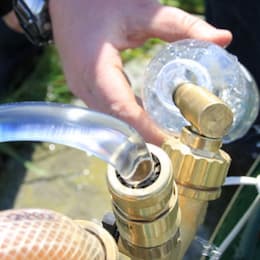
Groundwater quality assessment, contamination monitoring, hydrochemical analysis, and long-term trend intelligence.
Current Solution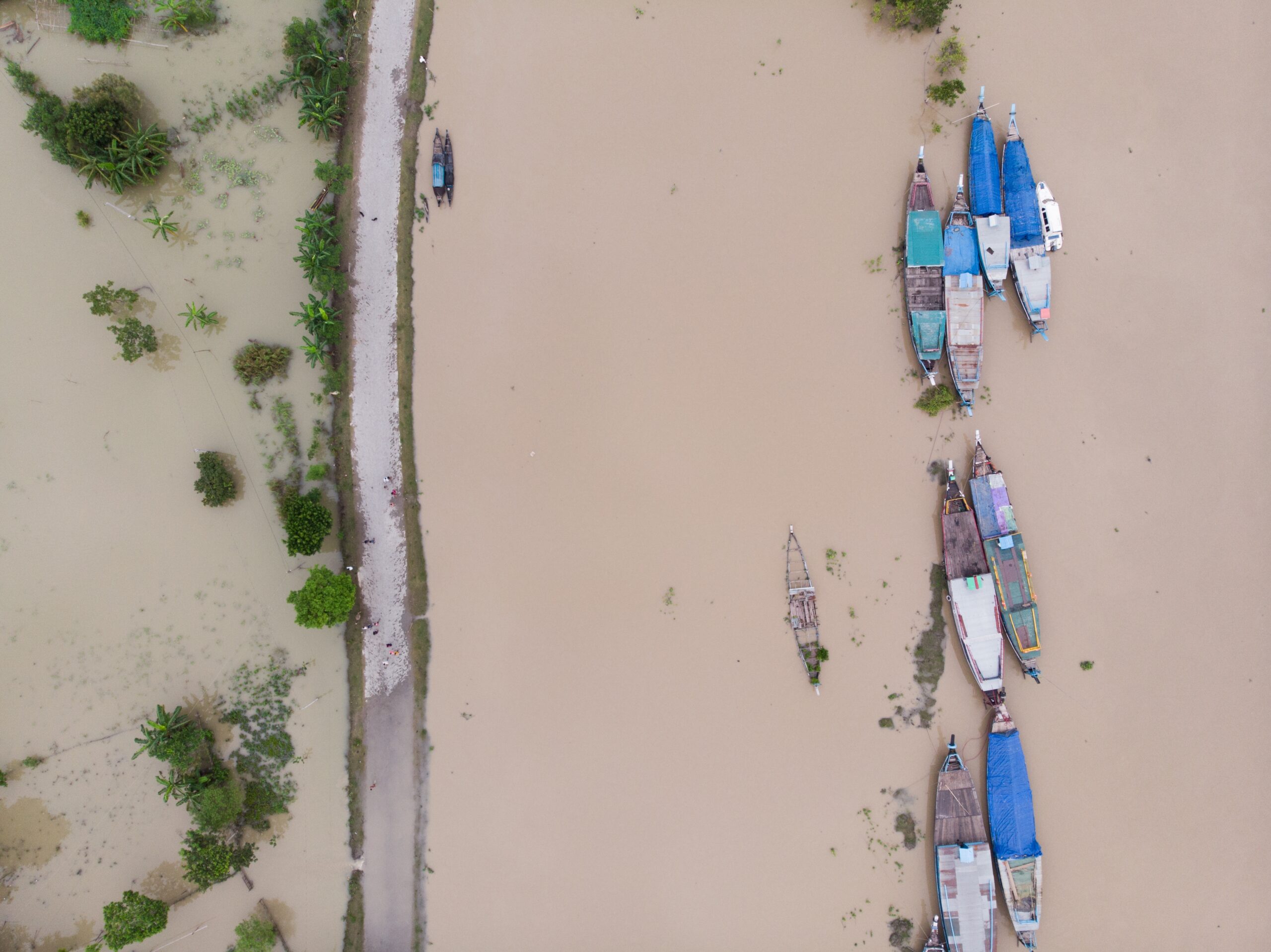
Flood assessment, modelling, mitigation planning, and resilience analysis across surface and groundwater flood sources.
View Solution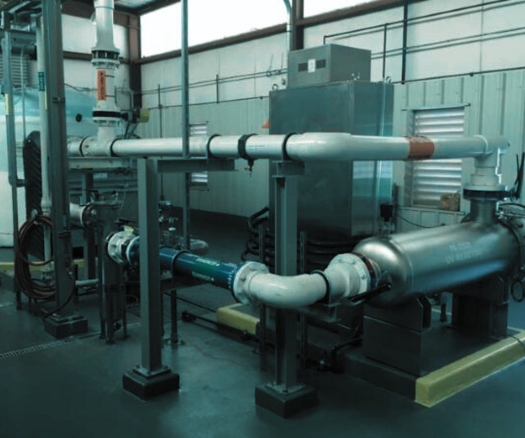
Contaminated groundwater treatment, contaminant transport modelling, and regulatory closure.
View Solution
Subsurface investigations and geotechnical intelligence for mining and tunneling.
View Solution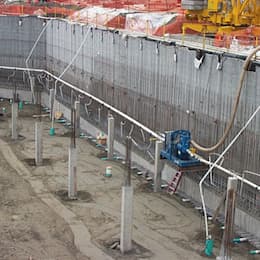
Water intrusion diagnostics for construction, metro rail, and underground structures.
View Solution
Risk assessment covering groundwater, water quality, supply, regulatory, operational, and sustainability exposure.
View Solution
Integrated planning across water supply, demand, allocation, sustainability, and long-term resource management.
View Solution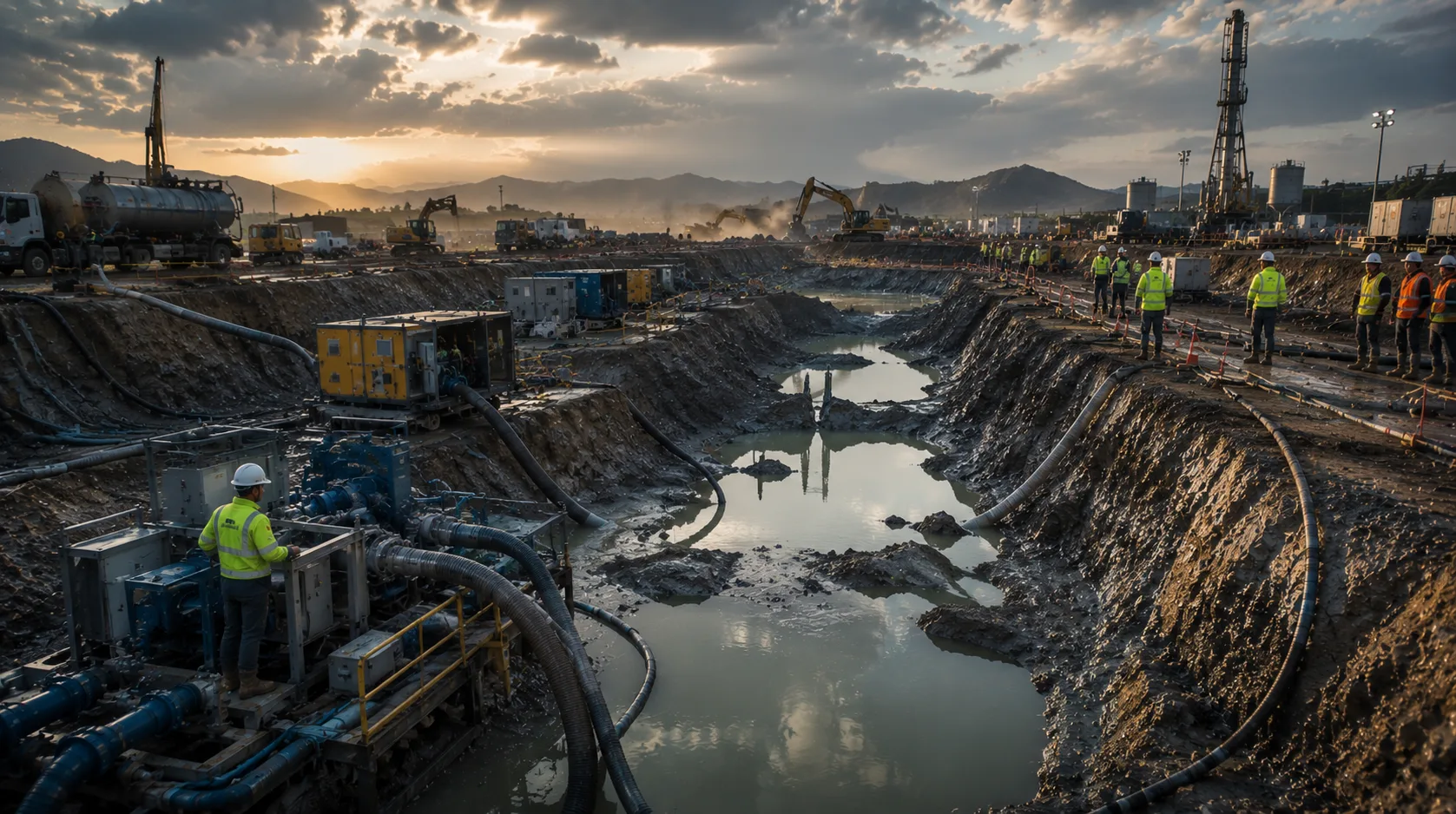
Groundwater control, dewatering assessment, system design, and management for construction, excavation, and mining projects.
View Solution
Contaminated land assessment and soil remediation for brownfield and industrial sites, with documentation supporting safe reuse.
View SolutionEffective groundwater quality management requires more than collecting samples and producing reports. It requires understanding how groundwater systems behave, how contamination moves, how risks evolve, and how decisions made today affect long-term water security. Whether the requirement is baseline characterization, compliance monitoring, contamination tracking, or real-time surveillance, the starting point is a direct technical conversation.
