 (+035) 527-1710-70
 NEWSLETTER


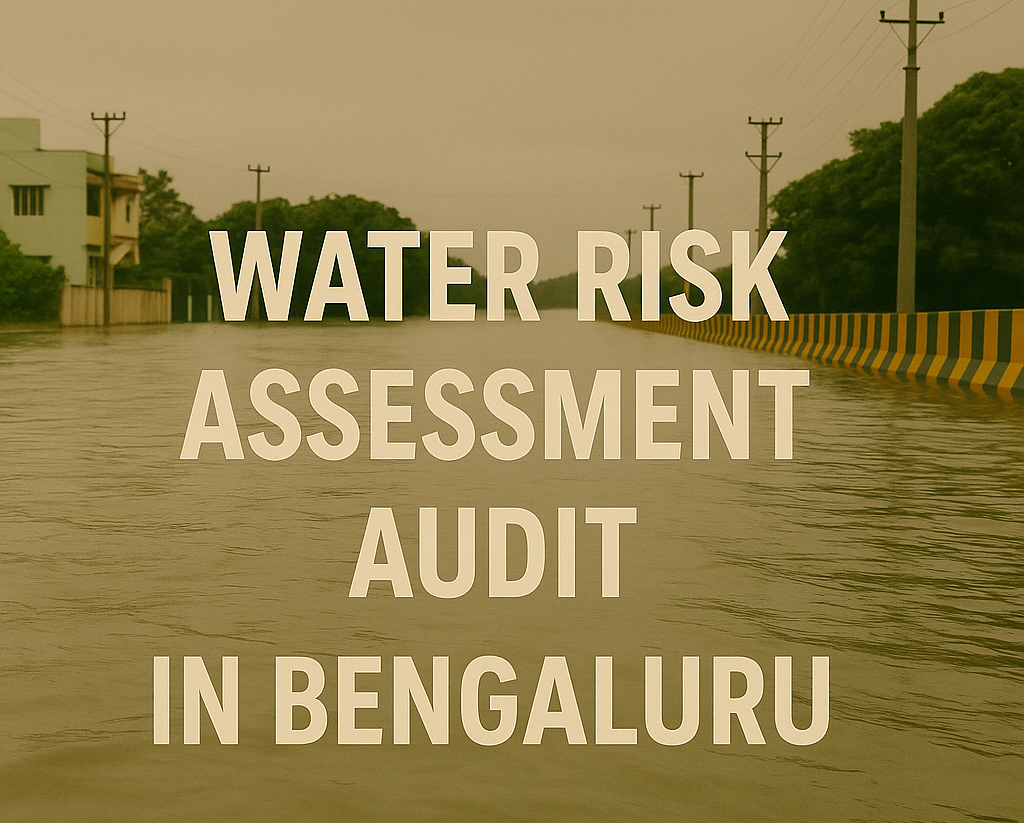
Introduction: Bengaluru’s Growing Water Risk Reality
Bengaluru’s rapid urban expansion has transformed it into one of India’s most important technology and industrial hubs. At the same time, this growth has placed intense pressure on the city’s water systems. Once sustained by a network of lakes and shallow aquifers, Bengaluru today relies heavily on groundwater extraction, tanker supply, and long-distance surface water transfers.
Erratic rainfall, declining recharge zones, lake encroachment, and increasing demand from residential, commercial, and industrial developments have created a complex water risk landscape. Many organisations operating in Bengaluru face recurring issues such as borewell failure, regulatory uncertainty, rising water procurement costs, and operational disruptions linked to water scarcity.
In this context, Water Risk Assessment Audit in Bengaluru has become an essential planning and compliance tool rather than a precautionary exercise.
What Is a Water Risk Assessment Audit?
A water risk assessment audit is a structured evaluation of water-related risks that may impact operations, infrastructure, compliance, and long-term sustainability. It examines how water availability, quality, regulatory controls, and environmental factors interact with a site or organisation.
Unlike basic water audits that focus only on consumption, a water risk assessment audit looks at:
-
Source reliability (groundwater, surface water, external supply)
-
Exposure to scarcity, depletion, or contamination
-
Regulatory and compliance risks
-
Operational and financial vulnerability
-
Long-term sustainability under changing climate conditions
The outcome is a risk-informed framework that helps organisations plan mitigation strategies before disruptions occur.
Water Risk Assessment Challenges in Bengaluru
Bengaluru presents a unique and evolving set of water-related risks that make auditing both necessary and complex.
1. High Dependence on Groundwater
Large parts of the city depend on borewells due to limited piped supply coverage. Over-extraction has led to falling groundwater levels and unpredictable well yields, especially in eastern and southern zones.
2. Declining Recharge and Lake Systems
Urbanisation has reduced natural recharge areas and disrupted lake connectivity. Many traditional water bodies no longer function effectively as recharge systems, increasing long-term water vulnerability.
3. Seasonal and Climate Variability
Rainfall variability has intensified. Short, intense rainfall events cause surface runoff and flooding without contributing significantly to recharge, while prolonged dry periods stress existing sources.
4. Quality and Contamination Risks
In some localities, groundwater quality issues—such as elevated TDS or contamination from sewage intrusion—pose risks to both usage and compliance.
5. Regulatory and Compliance Pressure
Water sourcing and usage in Bengaluru are increasingly subject to scrutiny. Inadequate documentation, unmanaged extraction, or poor risk planning can expose organisations to regulatory action or operational restrictions.
Our Water Risk Assessment Audit Approach in Bengaluru
At The Ground Water Company, water risk assessment audits are conducted as site-specific, data-driven evaluations tailored to Bengaluru’s hydrogeological and urban context.
Our approach typically includes:
-
Review of existing water sources and usage patterns
-
Assessment of groundwater availability and recharge potential
-
Evaluation of water quality and contamination exposure
-
Identification of regulatory and compliance risks
-
Scenario analysis for future demand and supply stress
-
Development of risk mitigation and management strategies
The detailed methodology and scope align directly with our core service offering on the
Water Risk Assessment Audit
This ensures the blog strengthens the authority of the service page while remaining informational in intent.
Why This Service Is Critical in Bengaluru
For organisations operating in Bengaluru, unmanaged water risk can translate directly into operational disruption, cost escalation, and reputational impact.
A structured water risk assessment audit helps:
-
Anticipate water scarcity before it affects operations
-
Reduce dependency on vulnerable sources
-
Improve planning for alternative supply and recharge
-
Strengthen compliance readiness
-
Support long-term sustainability goals
In a city where water stress is no longer occasional but structural, proactive risk assessment is a critical decision-support tool.
How Water Risk Assessment Connects with Other Groundwater Services
Water risk does not exist in isolation. In Bengaluru, risk mitigation often depends on insights from complementary groundwater services.
Water risk audits frequently integrate with:
-
groundwater quality monitoring services to track contamination trends and ensure source suitability
-
groundwater recharge planning to improve long-term availability and reduce extraction pressure
Together, these services help organisations move from reactive water management to planned resilience.
Regulatory & Compliance Context
Water management in urban India is increasingly guided by national frameworks and regulatory oversight. Water risk assessments must align with recognised data sources and compliance expectations.
Our audits are informed by guidance and datasets from:
-
Central Ground Water Board, which provides groundwater assessment data, aquifer status reports, and extraction guidelines
-
Ministry of Jal Shakti, which oversees national water policy, sustainability initiatives, and risk mitigation frameworks
Alignment with these institutions ensures that water risk assessments are technically credible, defensible, and suitable for regulatory review.
Other Groundwater Services We Offer
In Bengaluru, water risk assessment audits are often part of a broader groundwater management strategy. We also provide:
-
Ground Water Exploration
-
Ground Water Recharge
-
Ground Water Seepage Solutions
-
Dewatering Solutions
These services support a comprehensive understanding of subsurface water systems and help reduce long-term exposure to water-related risks.
Conclusion: Planning for Water Resilience in Bengaluru
Bengaluru’s water challenges are the result of long-term urban growth, changing climate patterns, and increasing demand on finite resources. Addressing these challenges requires more than short-term fixes or emergency sourcing.
A Water Risk Assessment Audit in Bengaluru provides organisations with the clarity needed to understand vulnerabilities, plan mitigation measures, and build long-term water resilience. By combining technical assessment with strategic planning, it supports informed decision-making in a city where water risk is now a defining operational factor.
For organisations seeking stability and compliance in a water-stressed urban environment, proactive water risk assessment is an essential step toward sustainable operations.