(+035) 527-1710-70
 NEWSLETTER


Introduction: Chennai’s Water Challenges Demand Integrated Planning
Chennai’s water challenges are shaped by a unique combination of coastal geography, rapid urbanisation, industrial growth, and climate variability. Despite receiving seasonal monsoon rainfall, the city continues to experience recurring water scarcity, flooding during intense rain events, saline intrusion in coastal aquifers, and increasing dependence on groundwater and tanker supply.
Historically, Chennai relied on a network of tanks, lakes, and shallow aquifers. Over time, urban expansion, land reclamation, loss of recharge zones, and fragmented water planning have weakened this balance. Today, surface water, groundwater, stormwater, and wastewater are often managed in isolation, leading to inefficiencies and long-term risk.
These interconnected challenges cannot be addressed through single-source or short-term solutions. They require coordinated, data-driven planning across water sources, land use, and demand. This is where Integrated Water Resource Management Services in Chennai become essential for sustainable and resilient water systems.
What Is Integrated Water Resource Management Services?
Integrated Water Resource Management (IWRM) is a structured approach to planning, developing, and managing water resources in a coordinated manner. It recognises that surface water, groundwater, land use, ecosystems, and human demand are interlinked and must be managed together.
Integrated water resource management services go beyond conventional water management by focusing on:
-
Coordinated use of surface water and groundwater
-
Alignment of water availability with sectoral demand
-
Sustainable water resource management under climate stress
-
Risk-based planning for scarcity, flooding, and quality issues
-
Long-term water security rather than short-term supply fixes
In practice, integrated water management combines hydrological analysis, groundwater management, water quality risk assessment, and demand forecasting into a single planning framework. This enables informed decision-making for cities, industries, infrastructure projects, and large developments.
Integrated Water Resource Management Challenges in Chennai
Implementing integrated water resource management in Chennai involves addressing several location-specific challenges.
1. Coastal Aquifers and Saline Intrusion
Chennai’s proximity to the coast makes its aquifers vulnerable to saline intrusion, especially when groundwater extraction exceeds recharge. Unmanaged pumping can permanently degrade freshwater resources.
2. Dependence on Groundwater and Tanker Supply
Large parts of the city rely on groundwater and private tanker water due to limited and uneven surface water distribution. This increases groundwater stress and operational costs.
3. Seasonal Extremes: Flooding and Scarcity
Chennai experiences sharp seasonal contrasts—water scarcity during dry months and urban flooding during intense monsoon events. Without integrated planning, excess rainfall is lost as runoff instead of contributing to recharge.
4. Fragmented Water Management Practices
Water supply, drainage, groundwater extraction, and wastewater reuse are often planned separately. This fragmentation reduces the effectiveness of water management solutions and increases long-term risk.
5. Water Quality and Risk Exposure
In certain areas, groundwater quality issues linked to industrial activity, sewage intrusion, and salinity pose risks to both usage and compliance. Water quality risk assessment is increasingly critical.
Our Integrated Water Resource Management Services Approach in Chennai
At The Ground Water Company, integrated water resource management services are delivered as a data-driven planning and risk assessment process, not as a generic policy exercise. Our work in Chennai integrates groundwater science, surface water analysis, and demand assessment to support sustainable decision-making.
Our approach typically includes:
-
Assessment of surface water and groundwater availability
-
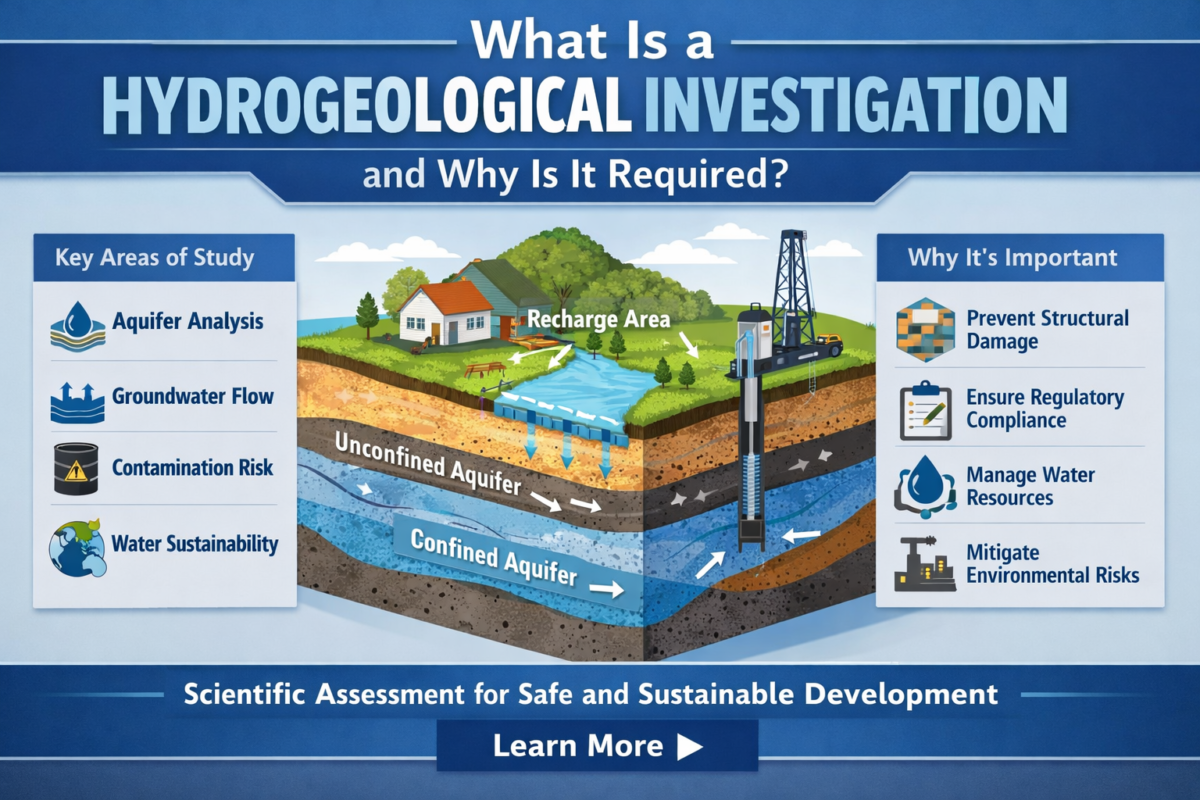
Groundwater management and aquifer behaviour analysis
-
Water demand assessment across domestic, commercial, and industrial sectors
-
Identification of water stress zones and risk areas
-
Evaluation of water quality and groundwater risk assessment
-
Development of phased water management solutions and monitoring strategies
The technical scope and execution align directly with our core service offering on the
Integrated Water Resource Management Services page.
This ensures the blog strengthens the authority of the service page while remaining informational and city-focused.
Why Integrated Water Resource Management Is Critical in Chennai
Chennai’s long-term water security depends on how effectively its water resources are planned and managed today. Integrated water resource management provides several critical benefits in the city context:
-
Improved Water Security: Coordinated planning reduces dependence on a single source and improves resilience during droughts.
-
Sustainable Groundwater Management: Managed extraction and recharge planning help stabilise aquifers and reduce saline intrusion risk.
-
Flood and Scarcity Mitigation: Integrated water management addresses excess water and scarcity within the same framework.
-
Water Risk Assessment: Identifying water quantity and quality risks early helps prevent operational and compliance issues.
-
Climate Adaptation: Integrated planning supports climate change and water resource management by preparing for variability and uncertainty.
Without integrated water management, isolated water management solutions may solve short-term issues while increasing long-term vulnerability.
How Integrated Water Management Connects with Other Groundwater Services
Integrated water resource management services do not replace technical groundwater services; they build on them. In Chennai, IWRM strategies are often supported by complementary services such as:
-
groundwater recharge planning, which improves aquifer sustainability and reduces saline intrusion risk
-
water risk assessment and groundwater risk assessment, which help identify vulnerabilities related to supply reliability and water quality
These services provide the technical foundation that allows integrated water management solutions to be practical, measurable, and adaptive over time.
Regulatory & Compliance Context
Water resource planning in India increasingly follows national frameworks that emphasise sustainability, risk management, and integrated approaches. Integrated water resource management services must align with recognised regulatory guidance and data sources.
Our approach is informed by:
-
Ministry of Jal Shakti, which oversees national water policy, river basin management, and sustainable water initiatives
-
Central Ground Water Board, which provides groundwater assessment data, aquifer status reports, and monitoring insights
Alignment with these institutions ensures that integrated water management recommendations are technically sound, policy-relevant, and suitable for implementation within Indian regulatory frameworks.
Other Groundwater Services We Offer
In Chennai, integrated water resource management is often implemented alongside other specialised groundwater and water management services, including:
-
Ground Water Exploration
-
Ground Water Seepage Solutions
-
Dewatering Solutions
-
Ground Water Quality Monitoring
Together, these services support a comprehensive understanding of water systems and enable sustainable water management at project, city, and regional levels.
Conclusion: Planning for Chennai’s Long-Term Water Resilience
Chennai’s water challenges are not driven by a single issue, and they cannot be resolved through isolated water management practices. Sustainable outcomes require coordinated planning that recognises the interdependence of groundwater, surface water, land use, water quality, and climate risk.
Integrated Water Resource Management Services in Chennai provide a structured framework to move from reactive water management to informed, long-term planning. By combining scientific assessment with practical water management solutions, integrated water resource management supports resilient development while protecting critical water resources.
For a coastal city facing growing demand, climate variability, and groundwater stress, integrated water management is no longer optional—it is essential for future water security.